Clinical Hours: Mon-Fri, 8AM - 3PM(905) 493-5700
1885 Glenanna Road, Suite 220, Pickering, ON, L1V 6R6
A patient-friendly overview of topical eczema treatments based on Canadian, European, and American dermatology guidelines.

If you or someone you love deals with eczema, the itchy, inflamed patches that just will not quit, you are far from alone. Atopic dermatitis (AD) is estimated to affect up to 15% of children and 4% adults in Canada at some point in their lives, making it one of the most common inflammatory skin conditions in this country [15]. The good news? The landscape of topical treatments has expanded dramatically in recent years, adding several new steroid-free options approved by Health Canada in addition to well known topical steroids treatment.
This article is based on the 2025 Canadian Consensus Guidelines for topical AD management [15], international references including the EuroGuiDerm guideline [1, 5], the American Academy of Dermatology (AAD) [2, 7], and the joint AAAAI/ACAAI guidelines [3].
A quick note: This article is for general education only and is not a substitute for medical advice. Always talk to your doctor or dermatologist before starting, stopping, or changing any treatment.
Where topical treatments fit in: Topical therapies are the cornerstone of eczema management and are typically used as monotherapy (the sole treatment) for mild disease, generally when the affected body surface area is less than about 10% [1, 2, 15]. For patients with moderate-to-severe eczema involving larger areas of skin, topical treatments remain essential but are usually used in combination with systemic therapies (such as biologics, oral JAK inhibitors, Methotrexate, Cyclosporine, Mycophenolate, or Azathioprine) or phototherapy rather than on their own [5, 7, 15]. Regardless of severity, daily moisturizing and appropriate topical anti-inflammatory therapy form the foundation of every eczema treatment plan.
Before choosing a treatment, your dermatologist considers both how your skin looks and how the disease affects your daily life. The Canadian Consensus Guidelines emphasize that disease severity assessment should encompass both physician-rated measures and patient-reported outcomes, meaning your experience of itch, sleep disruption, and quality of life matters just as much as the clinical exam [15]. This approach supports shared decision-making, where you and your dermatologist work together to find the best treatment strategy for your individual situation.
Every eczema management plan, regardless of severity, begins with daily moisturizing. Emollients help repair the skin's protective barrier, reduce water loss, ease dryness, and can extend the time between flare-ups [1, 2, 3, 15].
Practical tips:
The Canadian, European, and American guidelines all give moisturizers a strong recommendation as the foundation of any eczema treatment plan [1, 2, 3, 15].
When moisturizers alone are not enough, topical corticosteroids remain the most well-established treatment for active eczema flares. They calm inflammation and reduce itch, and have been a mainstay of AD therapy for decades [1, 2, 3, 15].
What you should know:
While TCS are often first-line treatment, they are not used indefinitely. Once treatment goals are achieved, transitioning to a non-corticosteroid maintenance therapy is recommended to prevent flares while reducing cumulative steroid exposure [15]. This reflects a growing consensus that steroid-sparing strategies are central to modern eczema management.
Addressing common fears:
"Corticophobia", fear of using topical steroids, is quite common among patients, and parents [1]. While prolonged, unsupervised use of very potent steroids on delicate areas can carry risks (such as skin thinning), when used as directed they are safe and effective. A widespread misconception is that steroids bleach or discolor the skin; in reality, colour changes around eczema patches are caused by the inflammation itself, rather than medication [4].
A word about "topical steroid withdrawal" (TSW):
You may have come across the concept of "topical steroid withdrawal" (also called "red skin syndrome" or "steroid addiction") on social media or online forums. This refers to a pattern of burning, stinging, and widespread redness that some patients report after stopping topical corticosteroids following prolonged use, particularly when potent steroids have been applied to sensitive areas like the face or genitals for months or longer [19, 20].
It is important to approach this topic with nuance:
The bottom line on TSW: If you are concerned about steroid dependence or withdrawal, the most important step is to discuss this openly with your dermatologist rather than stopping treatment abruptly on your own. Your doctor can help you taper appropriately and, where indicated, transition to one of the newer steroid-free maintenance therapies discussed below, which is exactly what the Canadian guidelines recommend [15]. Avoiding necessary treatment due to fear can lead to uncontrolled eczema, which itself causes significant harm to the skin and quality of life.
Reactive vs. Proactive therapy:
The Canadian panel highlights that non-corticosteroid topical maintenance therapy should continue beyond complete resolution to prevent flares and reduce the need for TCS over time [15].
The all current major guidelines including Canadian Consensus Guidelines recognize that non-corticosteroid topical therapies, including topical calcineurin inhibitors (TCIs), phosphodiesterase-4 (PDE4) inhibitors, and topical Janus kinase (JAK) inhibitors, can be used for widespread involvement of AD according to their approved indications, and are central to long-term maintenance strategies [15]. Several exciting new options are now available or emerging in Canada.
Delgocitinib (Anzupgo) is a topical pan-JAK inhibitor, meaning it blocks all four members of the JAK enzyme family (JAK1, JAK2, JAK3, and TYK2). This broad inhibition suppresses multiple inflammatory pathways involved in eczema, including those driven by IL-4, IL-13, and IFN-gamma [11, 12, 16].
Health Canada approved delgocitinib cream in August 2025, and the product became available across Canada in December 2025. It is the first and only topical treatment specifically indicated for moderate tosevere chronic hand eczema (CHE) in adults for whom topical corticosteroids are inadequate or not advisable [16, 17]. Canada's Drug Agency (CDA-AMC) issued a favourable reimbursement recommendation in October 2025 [17].
This is particularly significant for Canadians: chronic hand eczema affects an estimated 6% of the Canadian population, and until now, there was no approved topical therapy specifically for this condition [16].
Key points:
For patients struggling with the pain, itch, and functional limitations of chronic hand eczema, which can significantly affect the ability to work, perform daily tasks, and overall quality of life, delgocitinib represents a long-awaited, targeted treatment option.
Ruxolitinib cream (Opzelura) is a selective JAK1/JAK2 inhibitor and the first topical JAK inhibitor approved in Canada for atopic dermatitis [2, 5, 18].
Opzelura is a strong option for patients needing rapid itch relief and who have not responded adequately to conventional topical therapies.
Tapinarof cream 1% is an entirely new class of topical therapy: an aryl hydrocarbon receptor (AhR) agonist. Rather than only suppressing immune cells, tapinarof activates a receptor that helps reduce inflammation and restore the skin's barrier function simultaneously [13, 14]. Notably, tapinarof was originally discovered in Canada, and Canadian clinical trial sites played a significant role in its development program [22].
A note on brand names: Tapinarof is marketed under different names depending on the country. In the United States, it is sold as Vtama. In Canada, it is marketed as Nduvra. The formulation (tapinarof cream 1%) is the same.
Canadian regulatory status: Health Canada approved Nduvra (tapinarof cream) in April 2025 for the topical treatment of plaque psoriasis in adults, making it the first AhR agonist approved in Canada [22]. It has been available to Canadian patients since October 2025. Tapinarof is currently under review by Health Canada for an additional indication in atopic dermatitis in patients aged 2 years and older [22]. In the US, the FDA approved Vtama for AD in December 2024 [13, 14].
Key highlights:
When tapinarof (Nduvra) receives Health Canada approval for atopic dermatitis, it is expected to be a valuable addition to the Canadian dermatologist's toolkit, particularly for patients seeking long-term steroid-free maintenance with once-daily convenience.
Roflumilast cream (Zoryve) is a once-daily, steroid-free PDE4 inhibitor that has rapidly become one of the most widely prescribed branded topical treatments for eczema in the United States [8, 9].
Crisaborole (Eucrisa) was the first topical PDE4 inhibitor approved for eczema and is available in Canada. It is a non-steroidal ointment approved for mild to moderate AD in patients aged 3 months and older [2, 3]. Applied twice daily, it can reduce inflammation, itching, and skin thickening. The AAD gives crisaborole a strong recommendation [2].
If steroids are not working well, cause side effects, or your eczema is on a delicate area like the face, eyelids, neck, or skin folds, your doctor may prescribe a topical calcineurin inhibitor [1, 2, 3, 15]. Both are available in Canada:
TCIs block a protein called calcineurin that activates immune cells driving eczema inflammation. They can be used for both treating active flares and preventing new ones through proactive (maintenance) therapy [1, 3, 15].
Good to know:
Beyond prescription creams, these supportive measures can make a real difference:
Current guidelines recommend against the routine use of topical antimicrobials, antiseptics, and topical antihistamines for eczema. The evidence supporting these approaches is limited, and long-term topical antibiotic use carries the risk of bacterial resistance [1, 2]. Short-term antibiotics may be appropriate when skin is clearly infected [1].
If your eczema remains poorly controlled despite regular moisturizing and appropriate topical therapy, it may be time to discuss systemic (whole-body) treatments with your dermatologist. Options that have expanded significantly in recent years include biologic injections (such as dupilumab, tralokinumab, lebrikizumab, and nemolizumab) and oral JAK inhibitors [5, 7].
Beyond creams and ointments, your dermatologist has access to several additional tools that can play an important role in diagnosing and managing eczema, particularly when topical therapies alone are not enough, or when the clinical picture needs clarification.
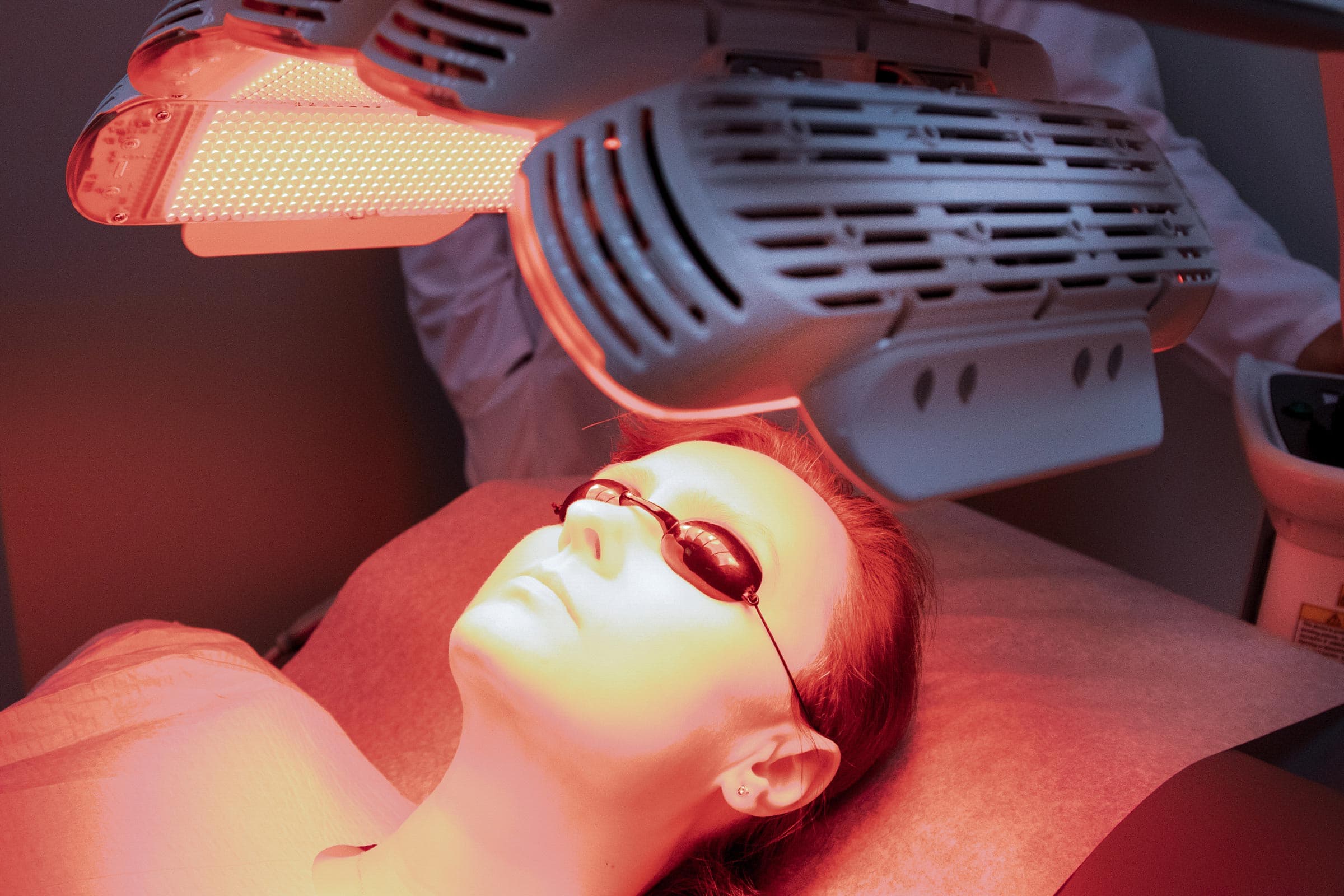
For patients with moderate eczema that is not fully controlled by topical treatments, narrowband UVB phototherapy is one of the most effective and well-established non-drug options. It involves exposing the skin to carefully controlled ultraviolet light in a medical setting, typically two to three times per week over a course of several weeks [1, 5].
Both the EuroGuiDerm and AAD guidelines recommend narrowband UVB and medium-dose UVA1 as effective forms of phototherapy for eczema, including for reducing itch [1, 5]. Phototherapy can be used alongside topical corticosteroids, calcineurin inhibitors, and moisturizers, and can be a helpful bridge for patients who need more than topical therapy but may not yet require, or prefer to avoid, systemic medications. However, phototherapy does require regular clinic visits, which can be a practical limitation for some patients.
Not every rash that looks like eczema is purely atopic dermatitis. In some patients, particularly adults with eczema that does not follow typical patterns, does not respond as expected to treatment, or is concentrated on the hands, face, or eyelids, an overlapping allergic contact dermatitis may be contributing to the problem.
Patch testing is a diagnostic procedure in which small amounts of common allergens are applied to the skin (usually on the back) under adhesive patches for 48 hours, then read at 48 and 96 hours to identify delayed-type allergic reactions. It is the gold standard for diagnosing contact allergy and can uncover hidden triggers, such as preservatives in skincare products, fragrances, metals (like nickel), or even ingredients in topical medications themselves.
Studies show that patients with atopic dermatitis have a higher rate of contact sensitization than the general population, and identifying and avoiding these triggers can significantly improve treatment outcomes. If your eczema is stubbornly persistent despite appropriate therapy, or if it flares in unusual patterns, ask your dermatologist whether patch testing might be worthwhile.
In cases where the diagnosis is uncertain, for example, when the rash does not look like classic eczema, or when other conditions such as psoriasis, cutaneous T-cell lymphoma, or other dermatoses need to be excluded, your dermatologist may recommend a skin biopsy. This is a quick, in-office procedure performed under local anaesthesia in which a small sample of skin is taken and examined under the microscope. While not routinely needed for typical atopic dermatitis, a biopsy can be very helpful when the clinical picture is ambiguous.
Managing eczema is a journey, not a single prescription. The most effective approach combines consistent daily skin care with the right anti-inflammatory medications tailored to your individual needs. As the Canadian Consensus Guidelines emphasize, the choice of therapy should consider disease severity, patient factors, and treatment-related factors, and robust shared decision-making between you and your doctor is the foundation of successful management [15].
The treatment landscape for eczema patients is more promising than ever. New steroid-free options like delgocitinib for hand eczema, ruxolitinib for atopic dermatitis, and emerging agents like tapinarof and roflumilast are giving dermatologists and patients more tools to achieve the ultimate goal: clear skin, controlled itch, and a better quality of life, with less reliance on steroids.
Work closely with your dermatologist, do not be afraid to ask questions about your treatment plan, and remember: the goal is not just to treat flares, but to prevent them.
This article is intended for educational purposes and does not replace professional medical advice. Please consult your dermatologist for personalized treatment recommendations.
Your feedback helps us improve our news and clinical insights
From medical dermatology to surgical procedures, our clinic provides comprehensive care for all skin, hair, and nail conditions.