Clinical Hours: Mon-Fri, 8AM - 3PM(905) 493-5700
1885 Glenanna Road, Suite 220, Pickering, ON, L1V 6R6
Why psoriasis cannot be permanently cured, how comorbidities and cumulative life-course impairment shape its long-term burden, and what disease modification now means.

Few questions come up more often in the dermatology clinic than this one: can psoriasis be cured? The honest answer is nuanced. Psoriasis is not an infection that can be eradicated, nor a transient skin reaction that resolves with a single course of cream. It is a chronic, immune-mediated, systemic inflammatory disease shaped by genetics, immune memory, and environmental triggers. What has changed in the past decade, however, is the very concept of treatment success. The conversation has shifted from suppressing plaques during flares to fundamentally altering the long-term trajectory of the disease, an idea now described as disease modification.
Psoriasis has its roots in a combination of inherited susceptibility and acquired immune dysregulation. Specific genetic variants, particularly within the HLA-Cw6 region, predispose certain individuals to a chronic T cell-driven inflammatory loop centred on the interleukin-23 and interleukin-17 axis. Once this loop is established, even visibly clear skin retains long-lived populations of tissue-resident memory T cells in previously affected sites. These cells are biologically primed to reignite inflammation when triggered by stress, infection, injury, or certain medications. A clinical and pathological overview is available on the psoriasis condition page.
This is why clear skin does not equate to cured skin, and why discontinuing all therapy after a single successful course commonly leads to relapse within weeks to months. The immune fingerprint of the disease persists in the dermis long after the visible plaque has resolved, and the conditions that produced the inflammation in the first place are not removed by topical or systemic treatment alone.
Psoriasis is increasingly recognized as a systemic inflammatory disease rather than a skin condition in isolation. Up to a third of patients with cutaneous psoriasis develop psoriatic arthritis, an inflammatory arthropathy that, when untreated, can produce permanent joint damage. Cardiovascular and metabolic comorbidities, including hypertension, obesity, insulin resistance, dyslipidaemia, and non-alcoholic fatty liver disease, occur at higher rates in patients with moderate to severe psoriasis than in matched populations, and the relative risk of major cardiovascular events is elevated independent of traditional risk factors [3].
The psychological burden is equally important. Depression, anxiety, social withdrawal, and impaired sexual function are reported at substantially higher rates among patients with psoriasis, particularly when lesions involve visible or sensitive sites such as the face, scalp, hands, or genitals. These dimensions are now considered standard components of comprehensive psoriasis assessment rather than peripheral concerns [3].
Cumulative life course impairment. The concept of cumulative life course impairment, first articulated in psoriasis by Kimball and colleagues, captures the way these effects compound over time [2]. Repeated stigma, missed educational and occupational opportunities, accumulating comorbidities, and persistent low-grade inflammation each leave their mark, and the resulting burden grows in ways that are not reversed simply by clearing the next flare. Two patients with the same skin score at age forty may carry very different cumulative life impacts depending on how their disease was managed in the preceding two decades. This perspective reframes treatment goals beyond the current plaque toward the longer arc of a patient's life.
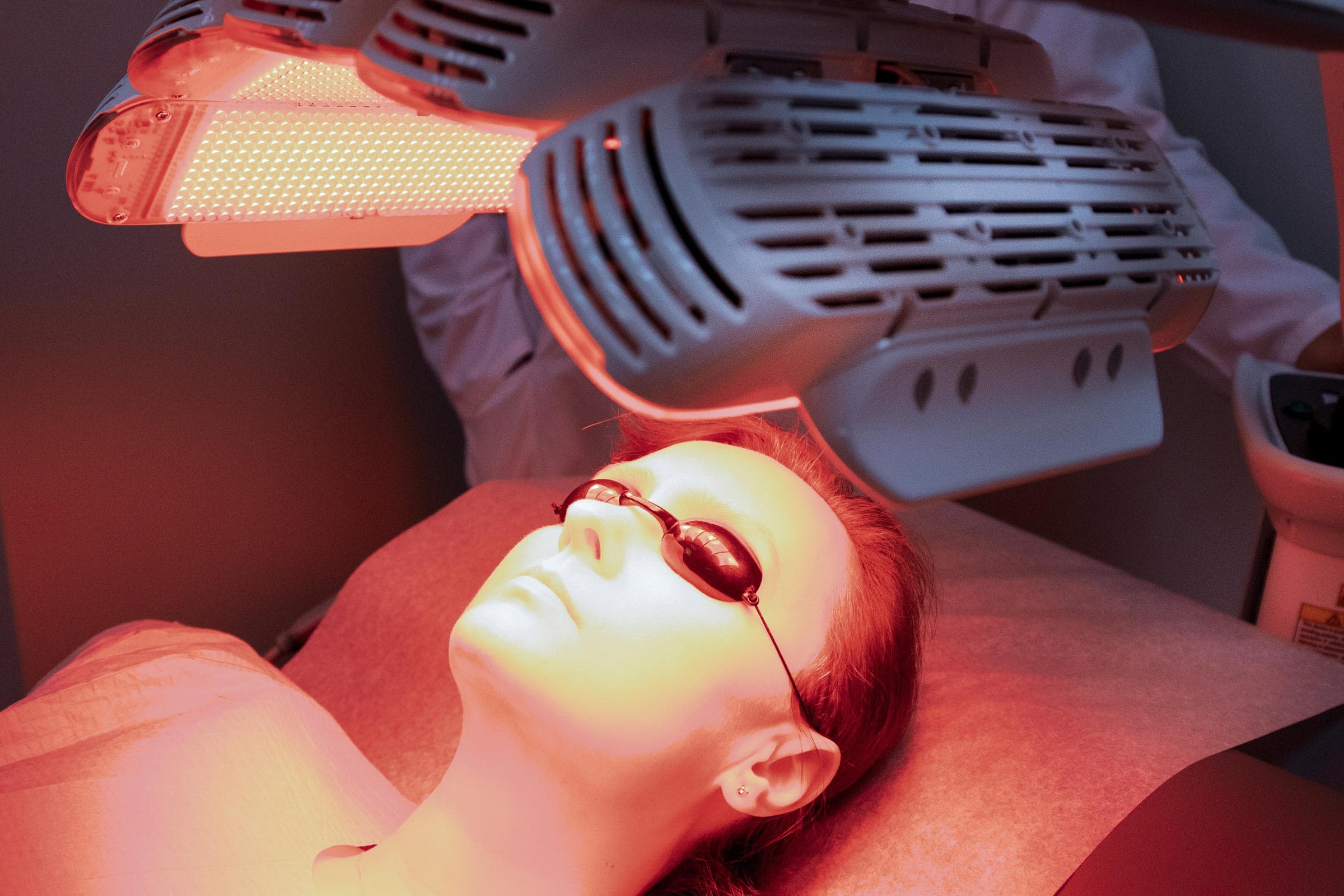
Traditional psoriasis management has focused on disease control: reducing visible inflammation, relieving itch and discomfort, and limiting the impact of flares on day-to-day life. Topical corticosteroids, vitamin D analogues, phototherapy, and conventional systemic agents remain central to this approach and are reviewed in the overview of psoriasis treatment options offered at this practice.
Disease modification is a different goal. Borrowed from rheumatology and now widely discussed in psoriasis, it refers to a treatment strategy that alters the natural course of the disease rather than only suppressing its symptoms. A disease-modifying approach aims for prolonged off-treatment remission, reduction or prevention of comorbidities such as psoriatic arthritis and cardiovascular events, attenuation of cumulative life course impairment, and durable changes in disease biology that persist after the medication has been adjusted or stopped. In psoriasis, this shift reflects what targeted therapies have made biologically plausible: durable interruption of the IL-23 and IL-17 inflammatory loop at its core.
Inflammatory diseases tend to be most responsive to intervention before they have entrenched themselves. In rheumatoid arthritis, decades of evidence have shown that early aggressive treatment changes the long-term course of joint disease. A similar principle is now being investigated in psoriasis.
The window of opportunity refers to a finite period, often early in the disease course, during which the immune system retains enough plasticity to be redirected. Acting within this window may, in theory, prevent the consolidation of pathological tissue-resident memory T cells, reduce the cumulative inflammatory load on the skin and the cardiovascular system, and lower the risk of progression from cutaneous psoriasis to psoriatic arthritis. Allowing chronic plaques to persist untreated for years, by contrast, may permit the disease to consolidate features that become progressively harder to reverse.
This concept is not yet a basis for routine guideline-driven decisions, and it remains an area of active investigation. It is, however, reshaping how dermatologists think about timing. A young adult with severe, persistent psoriasis is no longer regarded simply as a patient with a difficult skin condition. That patient carries a window during which the disease is potentially most modifiable, and waiting until joints are damaged, cardiovascular risk has accumulated, or psychosocial impact has become entrenched may carry consequences that extend well beyond the visible plaques.
The arrival of targeted biologic therapies has provided the first plausible tools to test the disease-modification hypothesis in psoriasis. These agents are monoclonal antibodies or fusion proteins that block specific cytokine signals known to drive the disease. Tumour necrosis factor inhibitors, interleukin-17 inhibitors, and interleukin-23 inhibitors each intervene at a different node of the inflammatory cascade, and all have demonstrated substantial efficacy in moderate to severe disease [4]. A detailed review of the individual agents is available in the article on biological agents for psoriasis.
What distinguishes the disease-modification conversation from the disease-control conversation is what these therapies appear to do to the underlying immune memory. Growing evidence suggests that selective and sustained blockade of the interleukin-23 axis can deplete the tissue-resident memory T cells that drive plaque recurrence, raising the possibility that meaningful periods of remission may be achievable even after dosing has been spaced out or temporarily stopped.
The KNOCKOUT study. This hypothesis is being tested directly in trials such as the KNOCKOUT study, a phase 2 randomized clinical trial of high-induction dosing of the interleukin-23 inhibitor risankizumab in moderate to severe plaque psoriasis [1]. In this small but mechanistically detailed study, eighteen patients received 300 or 600 milligrams of risankizumab at weeks 0, 4, and 16 and were then monitored without further dosing. By week 52, PASI 75, PASI 90, and PASI 100 responses of 77.8, 61.1, and 44.4 percent respectively were sustained off treatment, and lesional tissue-resident memory T cell populations had returned to non-lesional baseline levels. Although the cohort was small, the immunological and clinical signal supports the broader hypothesis that intensive early intervention can drive durable, off-treatment remission in carefully selected patients.
Together with the foundation of topical therapy and phototherapy, these advanced systemic options are now regarded as standard of care for moderate to severe psoriasis that has not responded adequately to simpler measures [4]. An overview of how these agents are selected and monitored in this practice is provided on the page on biologic and advanced small molecule therapy.
The honest reality is that psoriasis, as currently understood, cannot be cured in the way that a bacterial infection can be cured. The genetic susceptibility, the interleukin-23 and interleukin-17 driven inflammation, and the tissue-resident memory laid down during years of active disease are not erased even by the most effective therapies, and most patients will require some form of ongoing treatment strategy to remain clear.
What has changed is the depth and durability of the control now achievable, and the early but growing evidence that the right therapy delivered at the right time may reshape the long-term trajectory of the disease. The conversation about psoriasis is no longer limited to whether plaques are visible today. It now includes whether psoriatic arthritis can be prevented, whether cardiovascular and metabolic risk can be lowered, whether cumulative life course impairment can be limited, and whether sustained remission can be achieved with intensified early treatment.
For patients living with moderate to severe psoriasis, particularly those with joint symptoms, accumulating cardiovascular or metabolic comorbidities, or persistent skin involvement despite topical therapy, this is a meaningful shift. A consultation at the Centre for Medical and Surgical Dermatology allows for an individualized assessment of disease severity, comorbid risk, and treatment options, including whether biologic or advanced small molecule therapy may be appropriate in a given case.
This article is intended for educational purposes and does not replace professional medical advice. Please consult your dermatologist for personalized recommendations.
Your feedback helps us improve our news and clinical insights
From medical dermatology to surgical procedures, our clinic provides comprehensive care for all skin, hair, and nail conditions.