Clinical Hours: Mon-Fri, 8AM - 3PM(905) 493-5700
1885 Glenanna Road, Suite 220, Pickering, ON, L1V 6R6
Rosacea is a chronic inflammatory skin condition affecting the central face, with links to systemic health conditions and a range of treatment options.

Rosacea is a chronic inflammatory skin condition that primarily impacts the central area of the face, commonly occurring between the ages of 30 and 60. It is characterised by persistent redness on the face and tends to have periods of flare-ups and improvement. Managing symptoms involves a combination of lifestyle adjustments, general skincare, medications, and procedural treatments.
Rosacea is estimated to impact approximately 5% of adults globally. While it is often believed to affect women more than men, research has shown that the distribution between genders is nearly equal.
Typically, rosacea appears after the age of 30 and becomes more prevalent as individuals age. However, it can develop at any age and occasionally appears in children. Although rosacea can affect individuals of any background, it is more commonly observed in those with fair skin, blue eyes, and of Celtic or North European ancestry. Recognising and diagnosing rosacea may be more challenging in individuals with darker skin tones.
Rosacea has been linked to various health conditions, including depression, hypertension, cardiovascular diseases, anxiety disorders, dyslipidemia, diabetes mellitus, migraines, rheumatoid arthritis, Helicobacter pylori infection, ulcerative colitis, and dementia.
There are multiple factors that are known to cause rosacea. Mainly, genetic, environmental, vascular, and inflammatory agents result in rosacea's outburst. Moreover, chronic exposure to ultraviolet (UV) radiation is associated with skin damage.
The skin's innate immune response is directly linked with rosacea due to the presence of antimicrobial peptides, especially cathelicidins, in high concentrations. Cathelicidins play an important role in the skin's normal defence against microbes. Cathelicidins are essential in promoting the infiltration of neutrophils in the dermis as well as dilating blood vessels. Neutrophils release nitric acid which also promotes vasodilation. If fluid leaks from these dilated blood vessels, swelling occurs. As a result, pro-inflammatory cytokines leak into the dermis which in return increases inflammation.
Matrix metalloproteinases (MMPs) like elastase and collagenase are also closely linked with rosacea. These enzymes are essential in remodelling normal tissue, aiding the healing process in wounds, and promoting the production of blood vessels. In patients with rosacea, these enzymes are found in high concentrations which leads to cutaneous inflammation. Moreover, the skin gets thickened and hardened. MMPs can also activate cathelicidins which causes inflammation.
Hair follicle mites (Demodex folliculorum) and rosacea are also closely linked; however, the actual cause has not been determined yet.
Besides the factors mentioned above, rosacea can be triggered by different facial creams and/or oils as well as topical steroids.
Usually, rosacea appears in the form of red spots (papules) and in rare cases, as pustules. These spots have a dome-shaped form. Unlike acne, rosacea does not present any nodules, whiteheads, or blackheads. Depending on the type of rosacea, it can present as red areas (erythemato-telangiectatic rosacea), swelling (phymatous rosacea), and scaling (rosacea dermatitis).
Patients diagnosed with rosacea experience frequent blushing or flushing. A red face may be due to constant redness and/or prominent blood vessels. Red papules and pustules tend to appear mostly on the forehead, nose, cheeks, and chin. In rare cases, the trunk and upper limbs can also be affected. The facial skin may feel dry and flaky. Sun exposure, hot and spicy food or drinks can trigger even more redness. Individuals with sensitive skin may experience burning and stinging sensations as a reaction to makeup, facial creams, and/or sunscreens. In affected eye areas, ocular rosacea can be diagnosed. It is usually characterised by red, sore, and gritty eyelid margins with papules and styes.
Usually, rosacea is diagnosed through a regular clinical assessment performed by a dermatologist. A skin biopsy may be performed in order to observe any additional chronic inflammations and vascular changes. The Global ROSacea COnsensus (ROSCO) Panel recommends assessing rosacea based on diagnostic, major, and minor phenotypes. The diagnostic phenotype includes assessing fixed centrofacial erythema in a characteristic pattern and phymatous changes. The major phenotypes include assessing papules and pustules, flushing, and ocular rosacea. The minor phenotypes include assessing burning and/or stinging sensations, edema (swelling), and dry appearance.
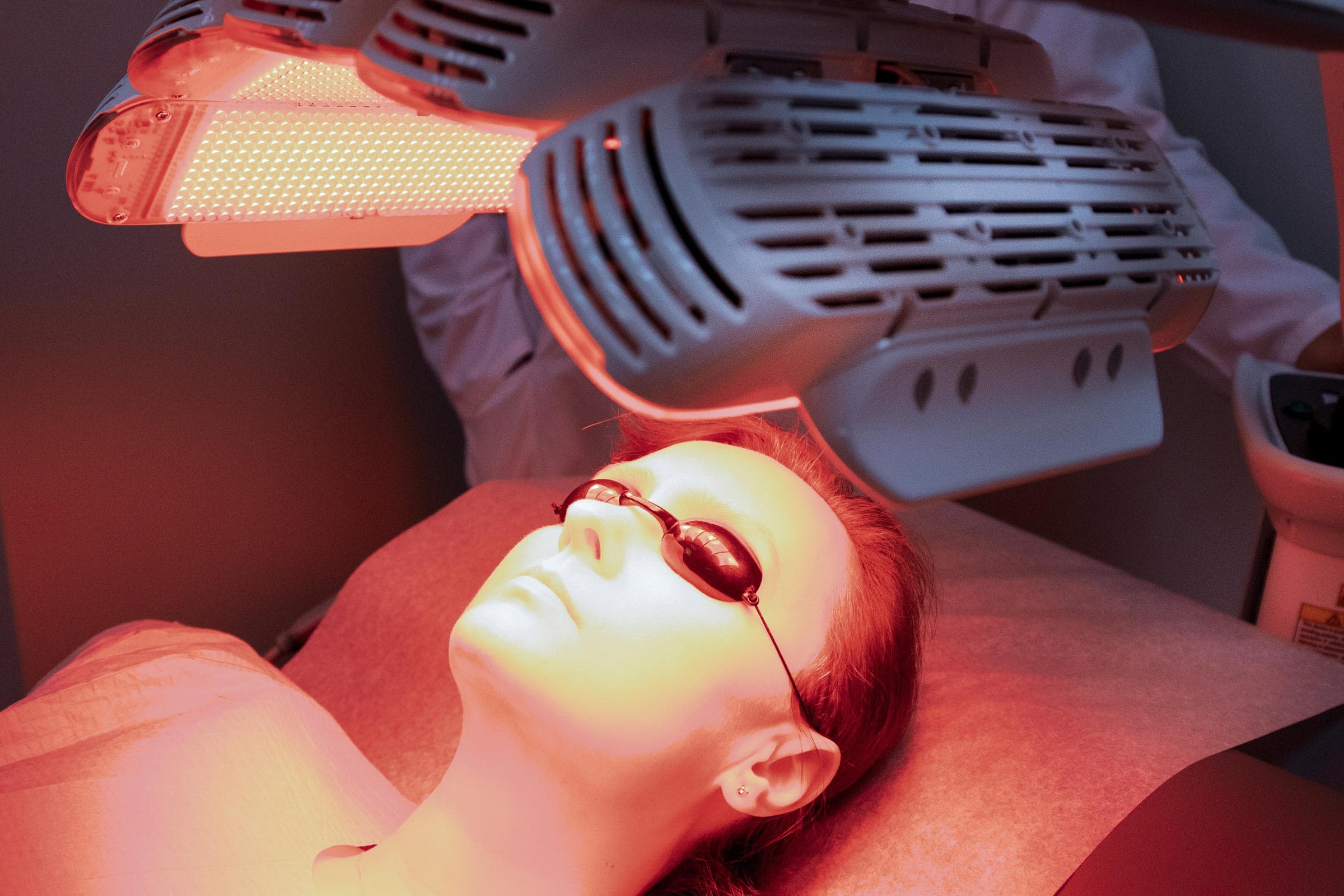
Numerous treatment methods are available for rosacea, with approaches tailored to each patient. Different variations of oral antibiotics or topical treatments may be prescribed as part of a course of treatment. Persistent blood vessels that contribute to rosacea can be successfully reduced with the non-invasive and non-ablative treatment method of Intense Pulsed Light (IPL) therapy.
Your feedback helps us improve our news and clinical insights
From medical dermatology to surgical procedures, our clinic provides comprehensive care for all skin, hair, and nail conditions.