Clinical Hours: Mon-Fri, 8AM - 3PM(905) 493-5700
1885 Glenanna Road, Suite 220, Pickering, ON, L1V 6R6
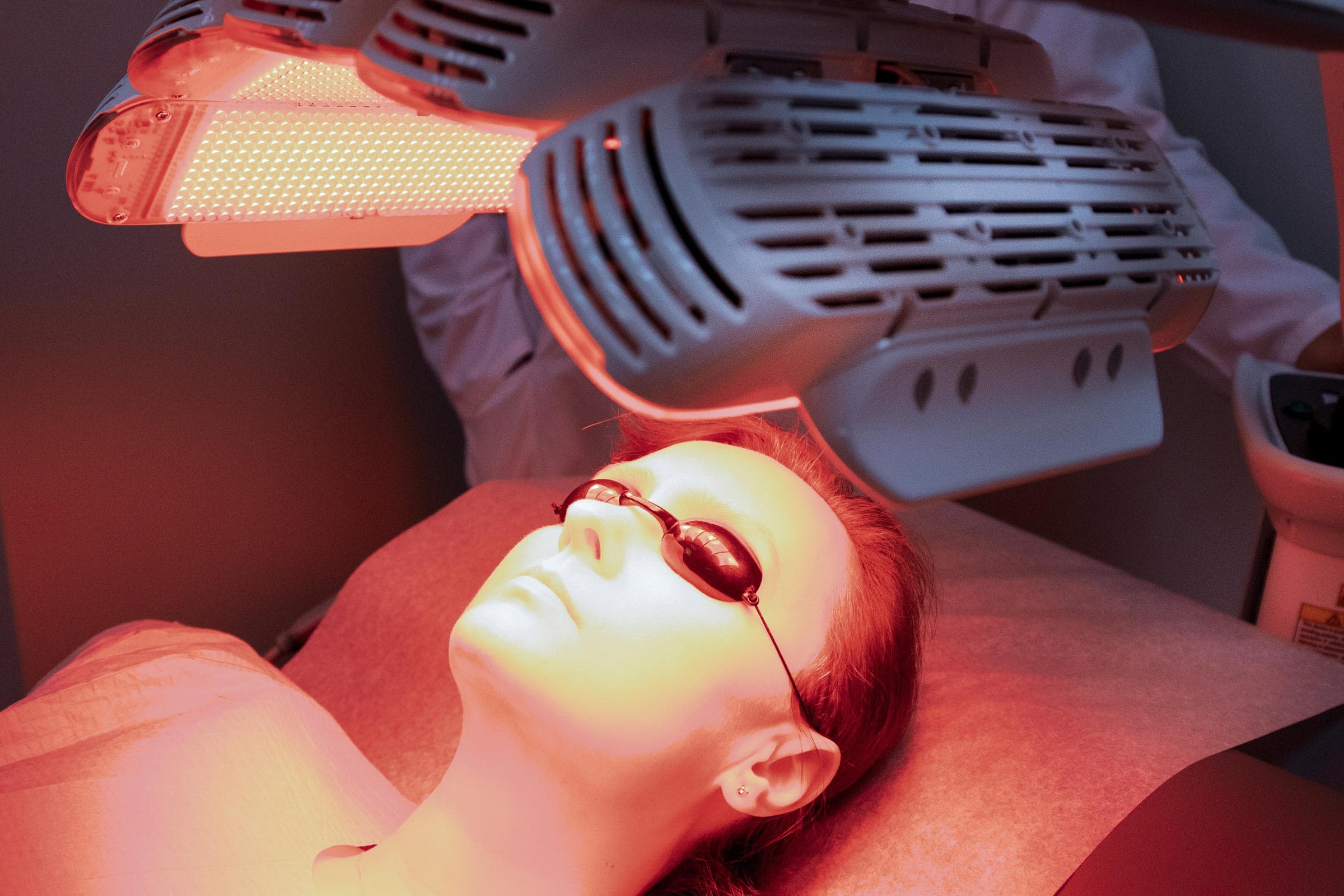
Low-level laser therapy is a safe, painless treatment for genetically inherited hair loss in men and women, stimulating hair regrowth with no known adverse effects.

Low-level laser therapy refers to a safe form of light treatment for a wide range of health conditions. It has been used to treat a genetically inherited condition of hair loss common to men and women.
Male pattern hair loss (e.g. androgenic alopecia) occurs in 70% of men and female pattern hair loss occurs in 40% of women during some point of their lifetime. In men, the pattern of alopecia involves vertex balding and hairline recession. Women, on the other hand, experience a diffuse form of hair thinning on the top of the scalp. For both men and women, hair loss is a psychologically distressing experience.
Current treatment methods include therapy options with finasteride and minoxidil. Some individuals choose the surgical option of hair transplantation. However, recent studies indicate that low-level laser treatment for hair loss represents a new and safe alternative or additional treatment procedure.
The normal hair growth cycle consists of three phases: anagen phase (growth period), telogen phase (resting period), and catagen phase (shedding period). In androgenic alopecia, hair loss depends on dihydrotestosterone (DHT), which is a testosterone derivative in the skin. Low-level laser therapy helps to increase blood flow in the scalp and stimulate the metabolism in telogen or catagen follicles, which increases the production of anagen hair. It also inhibits the excessive build-up of DHT in the body.
During the procedure, photons of light act on cytochrome C oxidase, which leads to the production of adenosine triphosphate (ATP). Within the cells of hair follicles, ATP is converted to cyclic AMP. As a result, energy is released and the essential metabolic processes for hair growth are stimulated.
Patients who have undergone laser therapy treatment experienced increased hair growth of approximately 19 regular-sized hairs per square centimetre on average. The treatments also resulted in significant improvements in overall hair condition, with hair becoming thicker and shinier.
Laser therapy for hair loss is an equally beneficial procedure for both men and women. It has no known adverse side effects. The overall procedure is painless. Improvements such as hair regrowth and a decrease in hair shedding are seen after 12 to 26 weeks of a regular treatment course. Regular sessions consist of two or three appointments per week, with each session lasting from 8 to 15 minutes. The procedure involves exposing the scalp to light-emitting diodes under a bonnet or head cap.
Your feedback helps us improve our news and clinical insights
From medical dermatology to surgical procedures, our clinic provides comprehensive care for all skin, hair, and nail conditions.