Clinical Hours: Mon-Fri, 8AM - 3PM(905) 493-5700
1885 Glenanna Road, Suite 220, Pickering, ON, L1V 6R6
Photodynamic therapy is a treatment targeting pre-cancerous skin changes, superficial skin cancers, acne, and various infections through photosensitising agents and light.

Photodynamic therapy (PDT) serves as a multifaceted treatment primarily targeting pre-cancer changes of the skin, such as actinic keratosis and, in certain situations, superficial skin cancers. Its effectiveness extends to conditions like actinic keratoses, in situ squamous cell carcinoma (Bowen disease), and superficial basal cell carcinomas. In certain cases, it also addresses small, thin, low-risk nodular basal cell carcinomas located outside the head and neck region.
Beyond its conventional applications, PDT finds use in off-label treatments, offering facial rejuvenation and addressing mild to moderate acne. Its therapeutic scope also encompasses various skin infections, including wound infections, onychomycosis, viral warts, and cutaneous leishmaniasis. The treatment's potential is further explored in conditions like psoriasis, mycosis fungoides, and extramammary Paget disease.
The mechanism of PDT relies on the use of photosensitising agents, oxygen, and light. These elements converge in a photochemical reaction that targets and eradicates cancer cells. Photosensitising agents are introduced into the body through topical, oral, or intravenous routes. Once administered, these agents accumulate in cancer cells and are activated under specific light wavelengths. This activation triggers a photodynamic reaction, producing reactive oxygen species such as singlet oxygen, hydroxyl radicals, and superoxides, which interact with cellular structures and lead to cell death.
The spectrum of photosensitising agents includes aminolevulinic acid solution and methyl aminolevulinic acid cream, known for use in treating actinic keratoses and superficial basal cell carcinoma. The cream, compatible with red light or daylight, ensures cutaneous photosensitivity resolves within a day post-application. Similarly, aminolevulinic acid hydrochloride topical solution, approved in Canada for actinic keratoses treatment, pairs with blue light.
PDT employs diverse light sources, including laser, non-laser, and ambient daylight. Laser light, characterised by its monochromatic, coherent, and intense nature, is suited for treating small skin lesions. Non-laser light, emitting polychromatic light, caters to the treatment of larger skin lesions and is cost-effective compared to laser sources. Ambient daylight, although freely available, requires careful consideration regarding exposure duration, reliability, and intensity based on location and season.
The application of PDT encompasses various skin conditions, including actinic keratoses, acne, basal cell carcinomas, cutaneous leishmaniasis, intraepidermal squamous carcinoma, squamous cell carcinoma, mycosis fungoides, Kaposi sarcoma, onychomycosis, psoriasis, and viral warts.
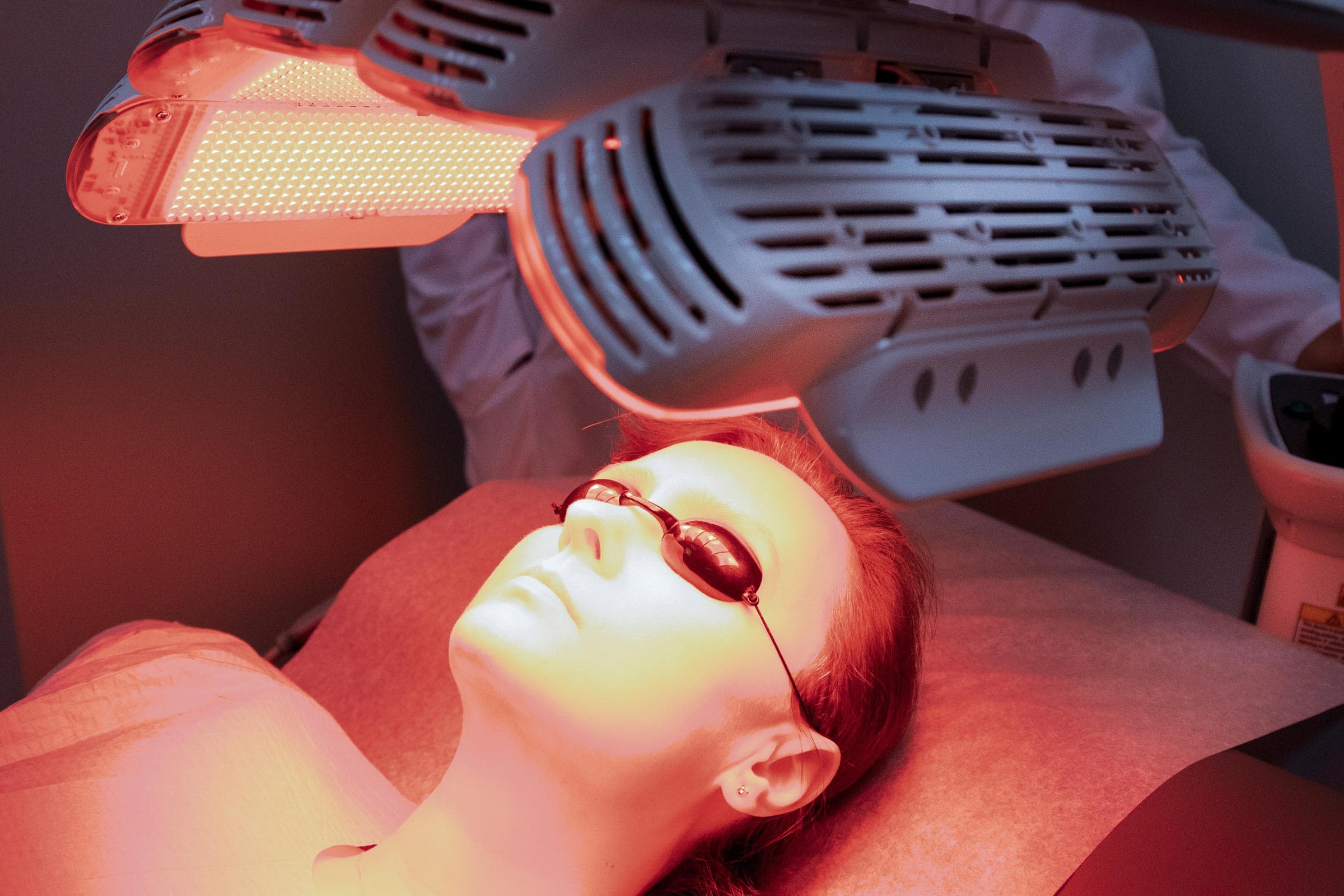
The administration of PDT involves multiple stages, beginning with potential skin preparation through gentle scraping or needling to enhance drug absorption. Following the application of the photosensitising drug, a waiting period allows for drug concentration in cancer cells. The treatment then proceeds with light exposure, varying in duration based on the light source used. After treatment, the area is protected from further light exposure, and a second treatment cycle may be followed if necessary. The healing process involves a sunburn reaction, typically resolving within 4 to 8 weeks. Recent studies suggest that pre-treatment with high-dose oral vitamin D could enhance the effectiveness of topical PDT.
While PDT is generally well-tolerated, potential side effects stem from light sensitivity of the treated area, lasting approximately 24 hours depending on the specific agent used. Side effects may include sensations of burning or stinging, swelling, redness, crust formation, itchiness, peeling, blistering, and potential skin infections. To mitigate discomfort during the procedure, local anaesthetics such as lignocaine spray may be applied. Post-treatment, the treated skin lesion may blister and ulcerate as cancer cells die, leading to healing over several weeks with minimal scarring, although pigment changes may occur. It is essential to acknowledge that while photosensitising drugs target cancer cells, they can also increase light sensitivity in healthy cells, necessitating protective measures against light exposure for a defined period, particularly when the drugs are administered systemically.
Your feedback helps us improve our news and clinical insights
From medical dermatology to surgical procedures, our clinic provides comprehensive care for all skin, hair, and nail conditions.