Clinical Hours: Mon-Fri, 8AM - 3PM(905) 493-5700
1885 Glenanna Road, Suite 220, Pickering, ON, L1V 6R6
When a single biologic medication is not enough, can two be used safely together? Dr. Maksym Breslavets shared findings at EADV 2026 in Athens and launched the Concurrent Biologics Registry.

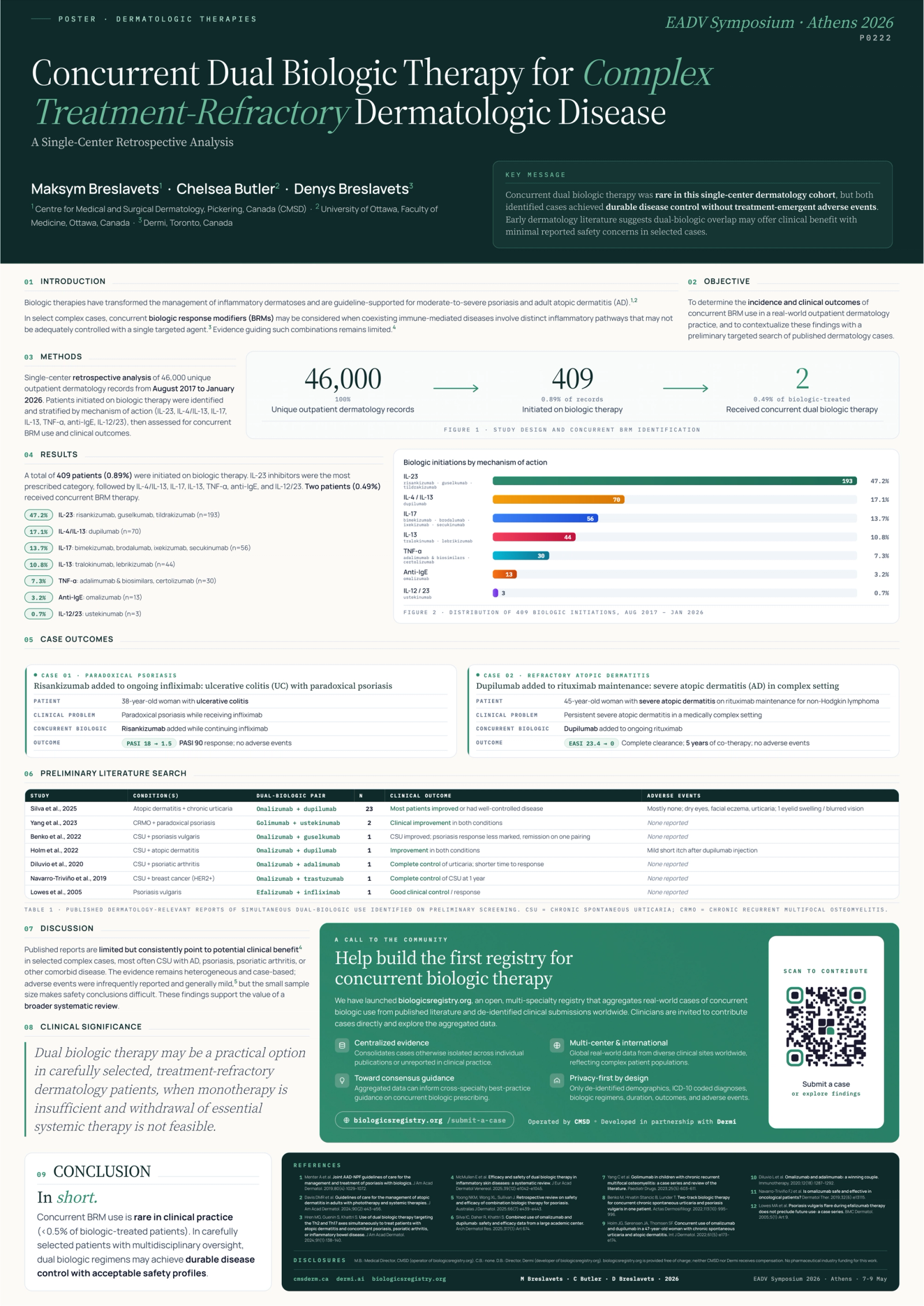
At the European Academy of Dermatology and Venereology (EADV) Symposium held in Athens, Greece, from 7 to 9 May 2026, Dr. Maksym Breslavets and his collaborators Chelsea Butler and Denys Breslavets presented findings from the Centre for Medical and Surgical Dermatology on the use of two biologic medications at the same time, known as concurrent dual biologic therapy, for patients with complex, hard-to-treat skin disease.
Biologic medications have transformed the treatment of several inflammatory skin diseases, including psoriasis, eczema (atopic dermatitis), hidradenitis suppurativa, and chronic hives. They work by precisely blocking specific molecules in the immune system that drive inflammation. For most patients, a single biologic is enough to bring the condition under good, long-term control [1][2].
Occasionally, however, one medication is not enough. This can happen when a patient has two different inflammatory conditions driven by different parts of the immune system, and each one needs its own targeted treatment. It can also happen when a medication required for an underlying disease, for example, an inflammatory bowel or joint condition, triggers a paradoxical skin reaction that cannot be addressed by stopping the original treatment. In other situations, the skin disease only partially responds to the first biologic, and adding a second agent may help achieve better control.
For each of these scenarios, the question of whether two biologics can be used together safely and effectively has become one of the more challenging in modern dermatology. Until recently, published guidance has focused on single-biologic regimens, and most of what is known about combinations comes from a relatively small number of case reports [3][4].
The team reviewed many years of patient records from the Centre for Medical and Surgical Dermatology, covering care delivered between 2017 and 2026. The review examined how often biologic therapy was prescribed across the practice as a whole, and how often two biologics ended up being used at the same time in the same patient.
The findings offer useful real-world context. Biologic therapy was prescribed in only a small minority of patients seen at the practice, a reminder that, although these medications often dominate conversations about modern dermatology, most patients can be effectively managed with simpler treatments. Among patients who did receive a biologic, only a very small number ever needed a second biologic added alongside the first. Combination biologic therapy, in other words, is genuinely uncommon: meaningful in carefully selected cases, but far from a routine approach.
For patients who continue to experience significant symptoms despite an optimally chosen biologic, or for those who must remain on a biologic for an underlying medical condition, the possibility of adding a second agent is worth discussing with a dermatologist experienced in advanced systemic therapy. The experience from this practice supports a measured position: most patients will never need dual therapy, but for the few who do, it can be a viable strategy when guided by an experienced team and coordinated with any other specialists involved in the patient's care.
This conclusion is consistent with a 2025 systematic review of dual biologic therapy in inflammatory skin diseases, which found favourable efficacy and a generally acceptable safety profile across the published cases to date, while also emphasizing the importance of individualized risk-benefit assessment and ongoing monitoring [4].
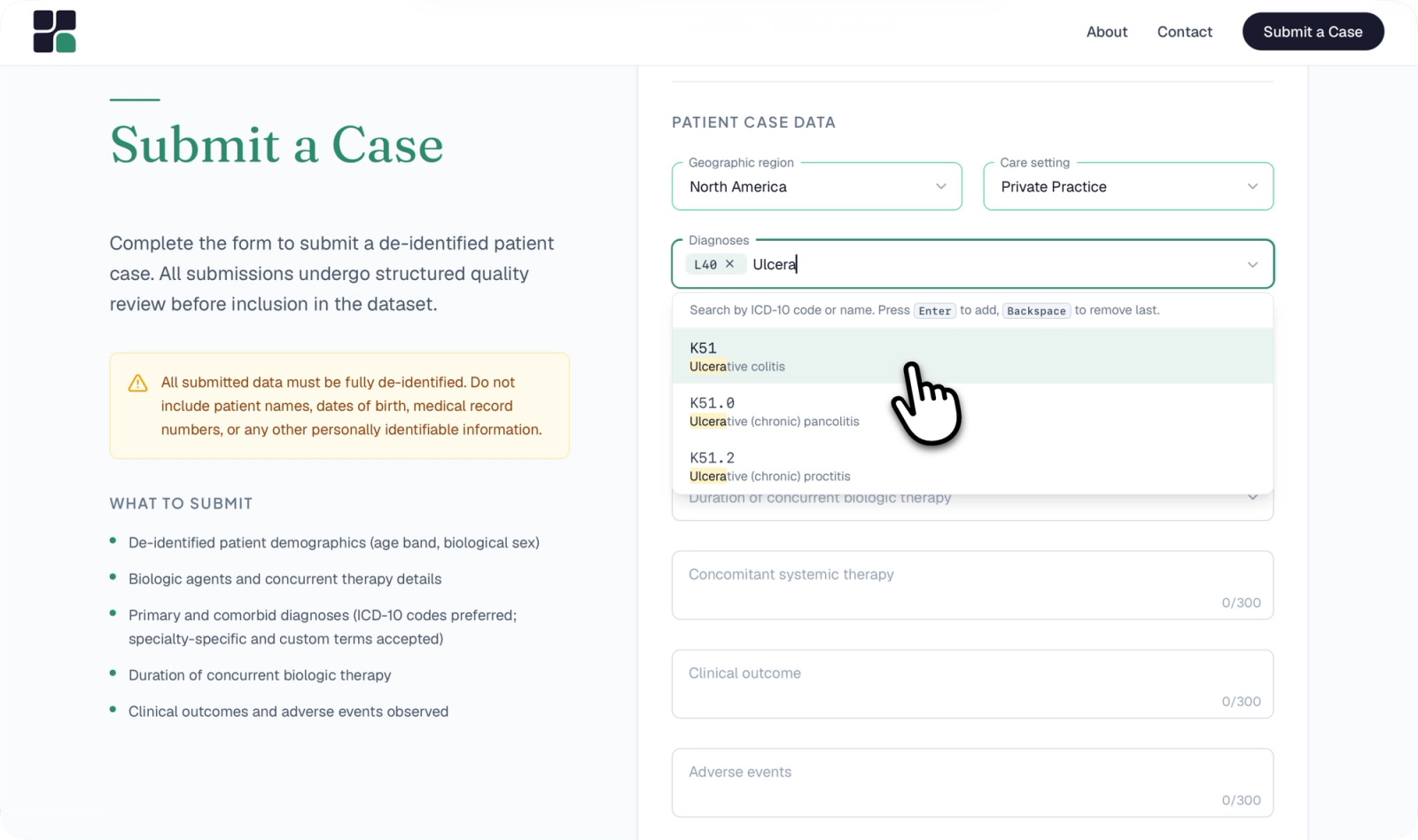
Because high-quality data on combination biologic regimens remains scarce, the team has launched the Concurrent Biologics Registry, an open-access, multi-specialty registry available at biologicsregistry.org and developed in partnership with Dermi, a Toronto-based healthcare technology company. The registry aggregates de-identified outcomes of concurrent biologic therapy across dermatology, gastroenterology, rheumatology, and related specialties, drawing on both the published literature and case submissions contributed by clinicians worldwide.
Dr. Maksym Breslavets serves as Principal Investigator and Registry Director of the Concurrent Biologics Registry. Every dataset, visualization, and reference on the site is freely available without registration, login, or payment. The registry receives no pharmaceutical industry funding and operates independently of drug manufacturers and trade groups, so that its scope, methodology, and content reflect only the clinical questions it is built to address.
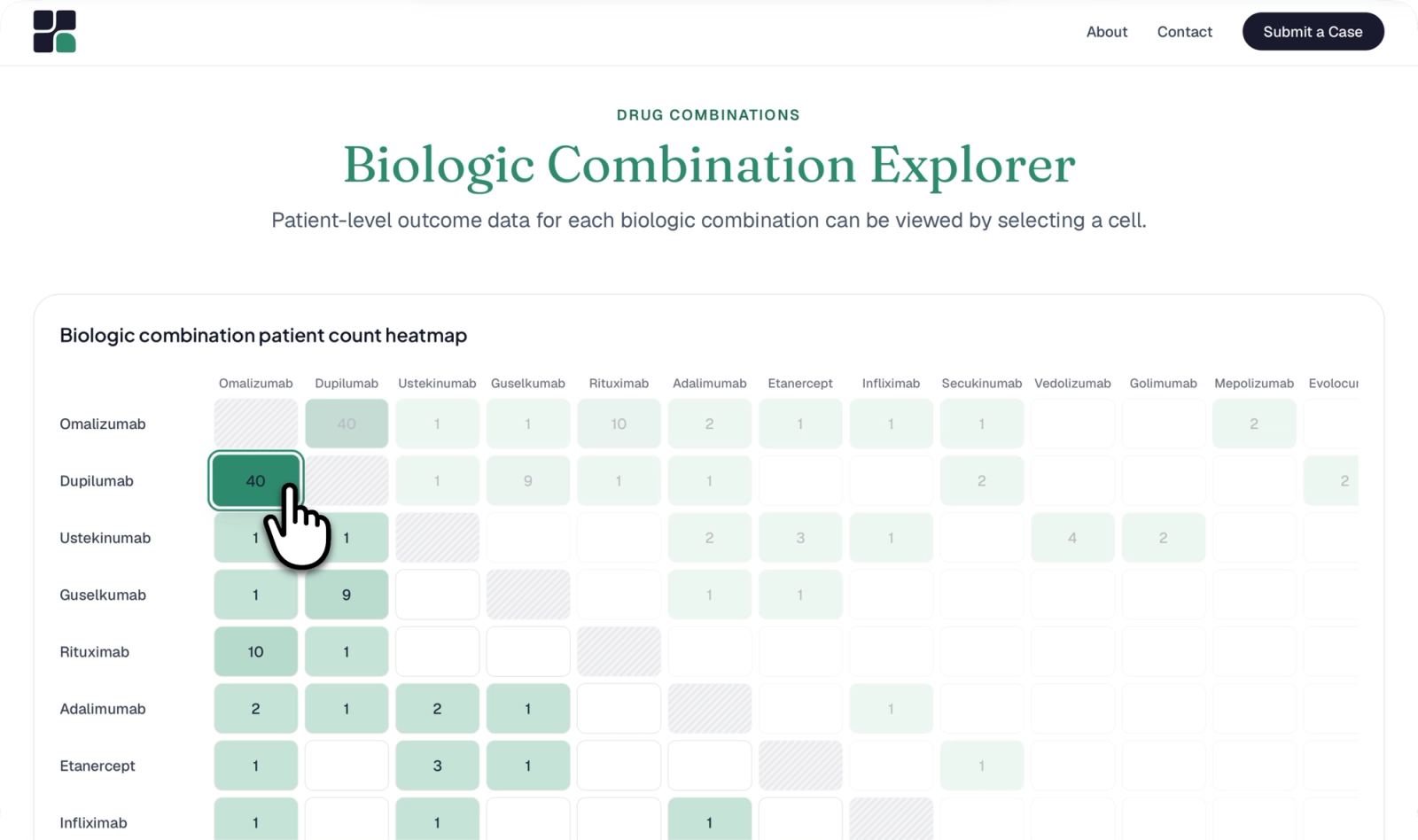
At the centre of the registry is the Biologic Combination Explorer, a heatmap of every pair of biologic agents that has been observed in the dataset. Each cell shows the number of patient cases recorded for that specific combination, and selecting a cell opens the underlying patient-level records, including the diagnoses treated, treatment durations, concomitant systemic therapies, and outcomes observed.
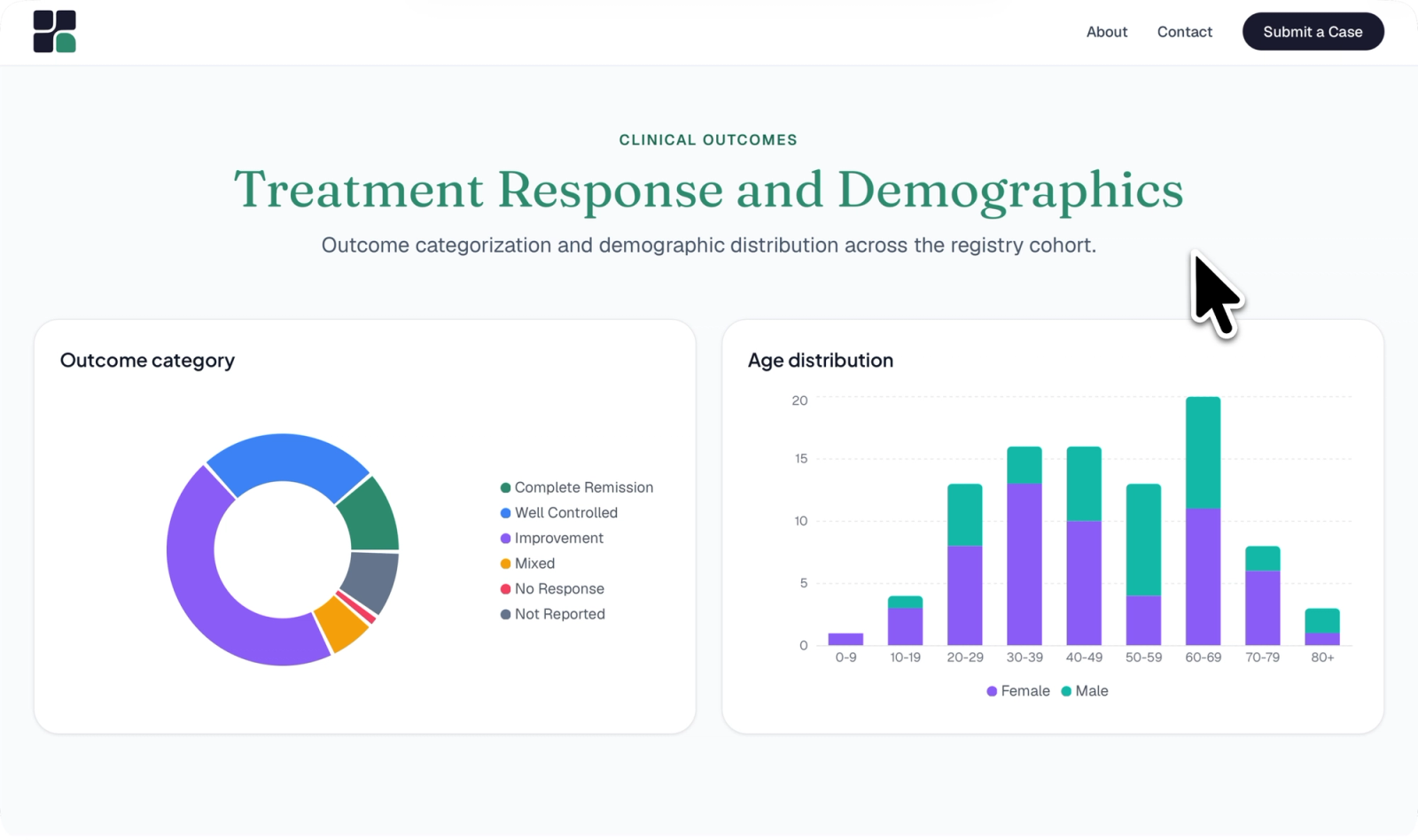
Alongside the combination matrix, a clinical outcomes dashboard categorizes each case by response to treatment, ranging from complete remission and well-controlled disease through improvement, mixed response, no response, and not reported, with corresponding age and sex distributions across the cohort. Taken together, these views give clinicians a quick read on how concurrent biologic regimens have performed in the populations represented in the registry to date.
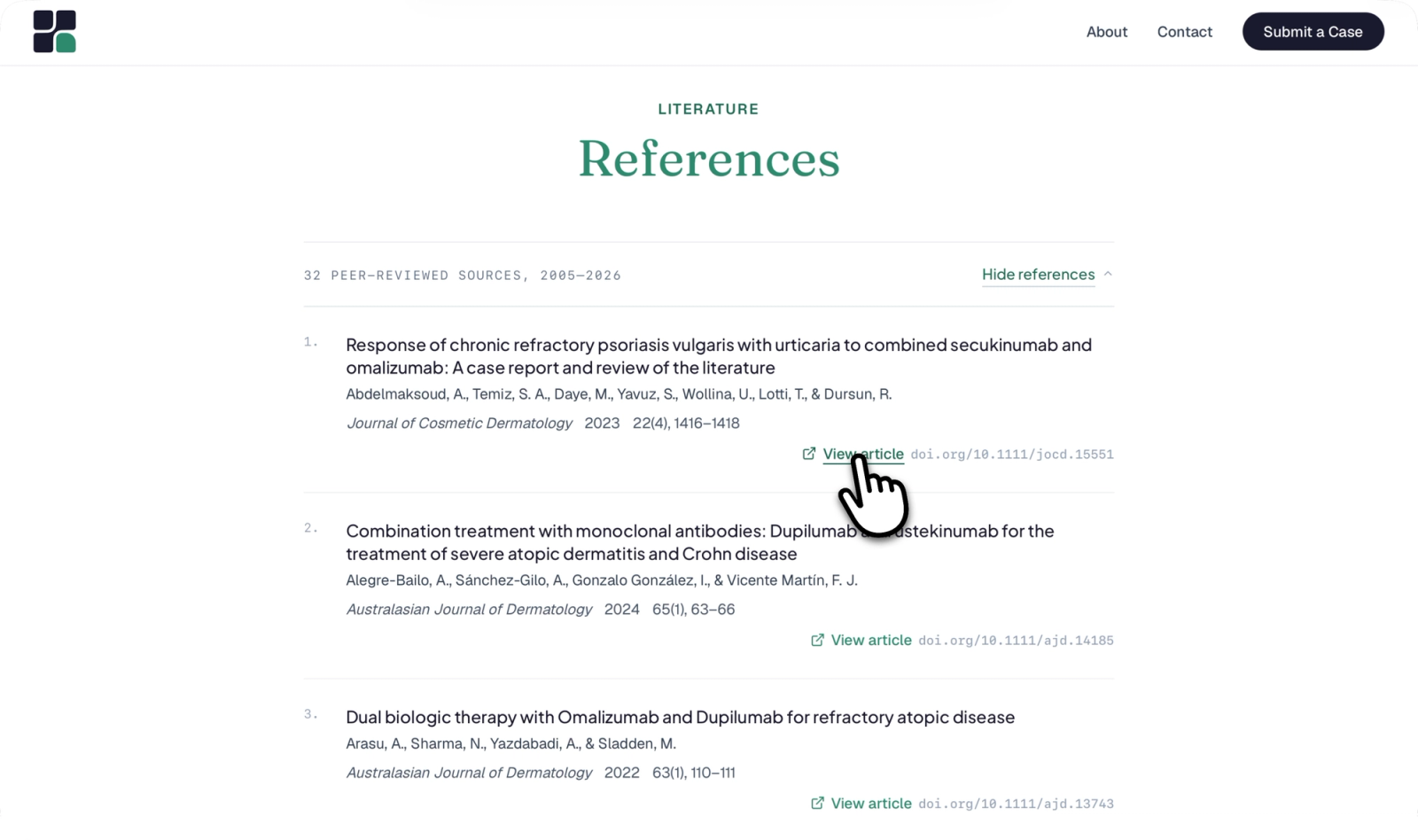
Every case included in the registry is anchored in a curated bibliography of peer-reviewed sources, published openly and linked by digital object identifier so that any analysis can be traced back to its primary publication. The registry therefore serves not only as a snapshot of current practice but as a continuously updated index of the published evidence on concurrent biologic therapy.
Physicians who care for patients on concurrent biologic regimens are invited to contribute their own cases through a structured submission form, which captures the same standardized fields that drive the visualizations on the site. All submissions are fully de-identified, restricted to demographic bands and clinical detail, with no patient names, dates, or other identifiers requested at any stage, and undergo structured quality review before inclusion. The wider the network of contributing clinicians, the richer the dataset becomes for the rare and complex scenarios that single-centre experience cannot answer on its own.
At the Centre for Medical and Surgical Dermatology, this kind of advanced treatment is delivered through the Immune-Mediated Skin Disease Program. More information is available on the pages covering biologic and advanced small molecule therapy and biological agents for psoriasis.
The Centre for Medical and Surgical Dermatology, based in Pickering, Ontario, contributes to international research through Dr. Maksym Breslavets and his collaborations with academic and industry partners. The dual biologic poster was co-authored with Chelsea Butler of the University of Ottawa Faculty of Medicine and Denys Breslavets of Dermi (Toronto).
Patients interested in learning more about the practice, including its participation in international research, are welcome to schedule a consultation.
This article is intended for educational purposes and does not replace professional medical advice. Please consult your dermatologist for personalized recommendations.
Your feedback helps us improve our news and clinical insights
From medical dermatology to surgical procedures, our clinic provides comprehensive care for all skin, hair, and nail conditions.