Clinical Hours: Mon-Fri, 8AM - 3PM(905) 493-5700
1885 Glenanna Road, Suite 220, Pickering, ON, L1V 6R6
Chronic inflammatory condition producing thick, silvery-white scales on the scalp; managed with topical treatments, phototherapy, and systemic medications.
Scalp psoriasis is a chronic, immune-mediated inflammatory skin condition that affects the scalp, producing raised, thickened plaques covered with silvery-white scales. It is a common manifestation of psoriasis, a systemic condition that can affect skin across the entire body. In scalp psoriasis, inflammation accelerates the skin cell cycle dramatically, causing new skin cells to be produced far more rapidly than old cells can be shed. This accumulation of cells results in the characteristic scaly plaques that are the hallmark of the condition.
Scalp psoriasis ranges from mild, with fine scaling, to severe, with thick, crusted plaques covering the entire scalp. In many cases, the condition extends beyond the hairline onto the forehead, the back of the neck, and the skin around the ears. It is estimated that approximately 45 to 56 percent of individuals living with plaque psoriasis will experience scalp involvement at some point during the course of their condition.
Although scalp psoriasis is not contagious and does not cause permanent hair loss in most cases, its visibility and associated symptoms can have a significant impact on quality of life. The condition tends to follow a relapsing and remitting course, with periods of flare alternating with periods of reduced or absent symptoms.
Scalp psoriasis arises from a dysregulation of the immune system in which T-cells mistakenly attack healthy skin cells. This immune activation triggers an inflammatory cascade that accelerates keratinocyte proliferation. The precise trigger for this immune dysfunction is not fully understood, but a combination of genetic predisposition and environmental factors is believed to be responsible.
Several risk factors are associated with the development and worsening of scalp psoriasis:
The clinical presentation of scalp psoriasis varies in severity and extent. Common signs and symptoms include:
Scalp psoriasis should be distinguished from seborrhoeic dermatitis, tinea capitis, and contact dermatitis, all of which can produce overlapping features. In some individuals, scalp psoriasis may coexist with psoriatic involvement of the nails, joints, or other skin surfaces.
Scalp psoriasis is most commonly diagnosed through a thorough clinical examination conducted by a dermatologist. The characteristic appearance of well-demarcated erythematous plaques with adherent silvery scales is usually sufficient to establish the diagnosis in most cases.
During the assessment, the dermatologist will review the patient's personal and family history of psoriasis, evaluate any associated skin, nail, or joint findings, and consider potential triggering factors. A review of current medications is also performed to identify any pharmacological contributors to the condition.
In cases where the diagnosis is uncertain, or where the condition does not respond as expected to standard treatment, a scalp biopsy may be performed. Histological examination of the biopsy specimen typically reveals characteristic findings including parakeratosis, acanthosis, epidermal thinning over dermal papillae, and a lymphocytic infiltrate. Fungal cultures or potassium hydroxide preparations may also be ordered to exclude tinea capitis when the clinical picture is ambiguous.
Treatment of scalp psoriasis is tailored to the severity of the condition, the extent of scalp involvement, and the individual patient's response to prior therapies. A stepwise approach is generally employed, beginning with topical treatments and escalating to systemic or biologic therapies when needed.
Topical corticosteroids are the most frequently prescribed first-line treatment for scalp psoriasis. Available in shampoo, foam, solution, and lotion formulations designed to facilitate application to the scalp, these agents reduce inflammation and slow epidermal cell turnover. Medium- to high-potency corticosteroids are commonly used for scalp involvement given the relative thickness of scalp skin.
Vitamin D analogues, such as calcipotriol, may be used alone or in combination with corticosteroids. Combination products offer the anti-inflammatory benefit of a corticosteroid alongside the antiproliferative effect of the vitamin D analogue. Topical calcineurin inhibitors, including tacrolimus and pimecrolimus, represent a steroid-sparing option suitable for use near the hairline and on facial skin.
Keratolytic agents such as salicylic acid are frequently incorporated into scalp psoriasis management to reduce scale thickness and improve the penetration of other topical medications. Medicated shampoos containing coal tar, salicylic acid, selenium sulphide, or zinc pyrithione can be used as adjunctive treatments to soften and remove scale.
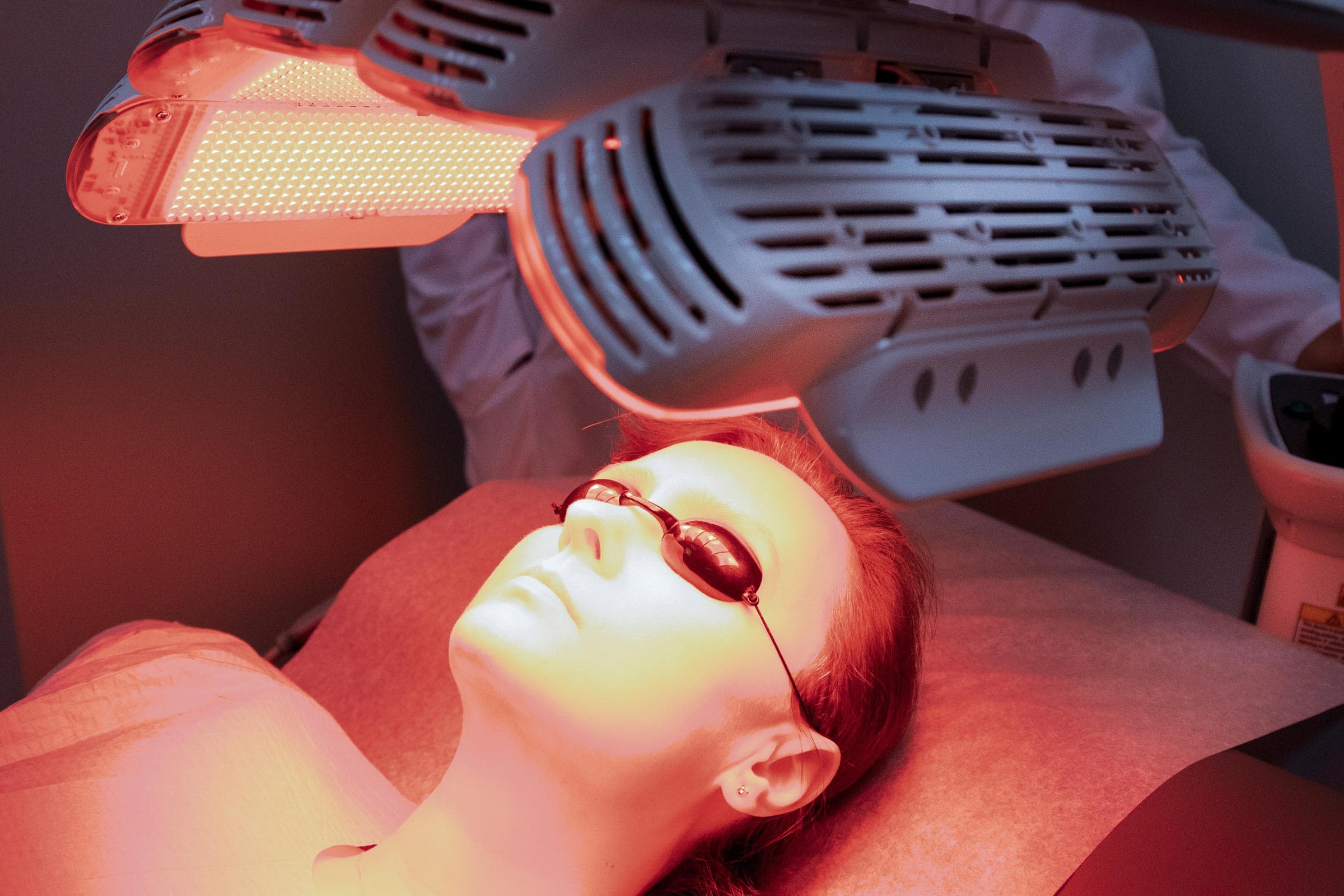
For moderate to severe scalp psoriasis that does not respond adequately to topical therapies, phototherapy may be recommended. Narrowband ultraviolet B (NB-UVB) light delivered via a handheld comb device is a specialised option that allows UV light to reach the scalp through the hair. Excimer laser therapy, which delivers targeted 308-nm UVB radiation, is another modality used for localised or recalcitrant plaques.
When scalp psoriasis is severe, widespread, or accompanied by psoriatic involvement of other body sites or joints, systemic treatment is considered. Conventional systemic agents include methotrexate, cyclosporine, and acitretin, each with a distinct mechanism of action and side effect profile requiring regular monitoring. Prescription management of these medications is available at the Centre for Medical and Surgical Dermatology.
Biologic therapies represent a significant advancement in the management of moderate to severe psoriasis. These targeted agents inhibit specific components of the immune pathway implicated in psoriasis, including tumour necrosis factor-alpha (TNF-alpha), interleukin-17 (IL-17), and interleukin-23 (IL-23). Biologics are typically reserved for cases that have failed conventional systemic therapy, or where such therapy is contraindicated. Small molecule oral treatments, including phosphodiesterase-4 inhibitors such as apremilast, offer another systemic option with a favourable safety profile relative to traditional immunosuppressants.
A dermatologist should be consulted if scalp scaling and itching persist despite the use of over-the-counter treatments, or if the condition is causing significant discomfort, hair loss, or psychological distress. Early assessment and accurate diagnosis are important because scalp psoriasis can be mistaken for seborrhoeic dermatitis or other scalp conditions, and inappropriate treatment may lead to unnecessary delay in achieving control.
Medical attention is also warranted when plaques extend beyond the scalp onto the face or neck, when joint pain or swelling accompanies the skin changes, or when the condition flares frequently despite ongoing treatment. A dermatologist can evaluate the full extent of psoriatic disease, screen for comorbidities such as psoriatic arthritis, metabolic syndrome, and cardiovascular risk, and develop a comprehensive long-term management plan.
At the Centre for Medical and Surgical Dermatology, Dr. Maksym Breslavets provides individualised assessment and evidence-based management for scalp psoriasis, drawing on the full range of topical, procedural, and systemic treatment options available in contemporary dermatological practice. A referral from a family physician is typically required to access dermatology services.
Your feedback helps us improve our condition information
Keep Exploring
Evidence-based articles on related skin, hair, and nail conditions.
A physician referral is required to access our medical services. Contact your primary care provider to begin the referral process.