Clinical Hours: Mon-Fri, 8AM - 3PM(905) 493-5700
1885 Glenanna Road, Suite 220, Pickering, ON, L1V 6R6
Photodynamic therapy uses photosensitizing agents, light, and oxygen to treat acne, actinic keratosis, and superficial skin cancers through a targeted photochemical reaction.

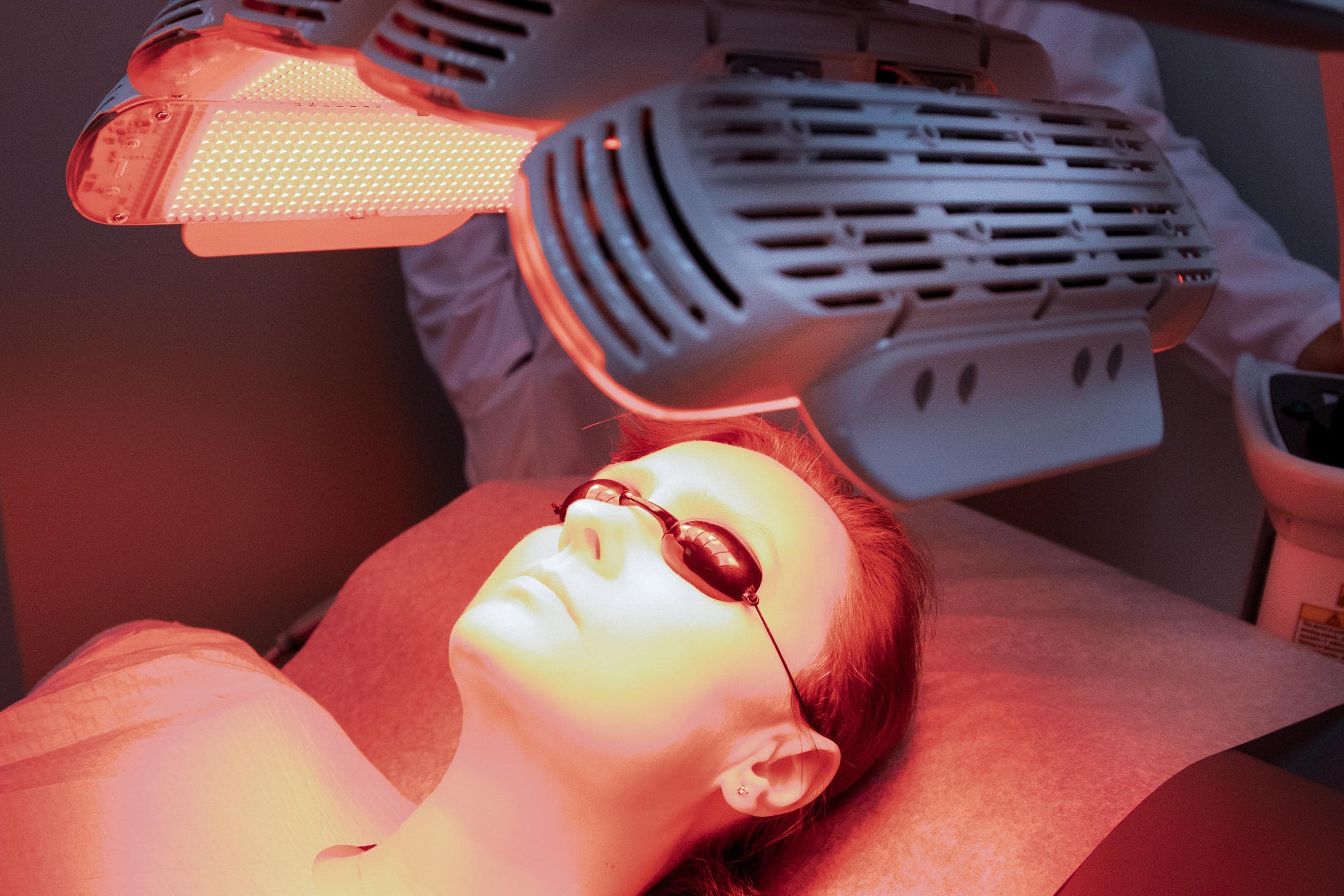
Photodynamic therapy (PDT) is a special treatment method used for facial rejuvenation and acne treatment (mild to moderate stages). It is also widely used for superficial types of skin cancer and pre-cancers. It is effective in treating actinic keratosis and superficial basal cell carcinoma.
PDT involves using photosensitizing agents, oxygen, and light to create a photochemical reaction that specifically targets cancer cells and destroys them. Photosensitizing agents refer to the type of drugs that must be administered into the body through topical, oral, or intravenous routes. Once they enter the body, they concentrate in cancer cells and become activated only when light of a certain wavelength is directed onto the affected site. The photodynamic reaction between the light, photosensitizing agent, and oxygen results in the destruction of cancer cells.
Some examples of photosensitizing agents include methyl aminolaevulinic acid cream and aminolaevulinic acid hydrochloride topical solution. Methyl aminolaevulinic acid cream is used with red light or daylight. The cutaneous photosensitivity usually resolves within 24 hours after its application to affected areas. The aminolaevulinic acid hydrochloride topical solution is used with blue light.
The light sources used in PDT include laser and non-laser light. Laser light has several advantages due to being monochromatic, coherent, and intense. Monochromatic means that only one colour and wavelength corresponds with the peak absorption of the photosensitizing agent. The coherent property enables the focus of lightwaves on a specific site. The intense property refers to high irradiance, which allows treatment times to be shorter.
Laser light is usually suitable for small skin lesions, while non-laser light is more suitable for larger skin lesions due to having a larger field of illumination.
Natural daylight is used as a light source for treating patients diagnosed with actinic keratosis.
PDT is used for various skin conditions including actinic keratosis on the face and scalp, squamous cell carcinoma, basal cell carcinoma, and acne.
The first stage of PDT treatment involves applying the photosensitizing drug onto the lesion. Prior to application, the skin may be gently scraped via curettage or needle in order to increase the amount of the drug absorbed. The wait time may range from 3 to 6 hours, allowing the drug sufficient time to be fully absorbed into cancer cells.
The second stage involves directing laser or non-laser light onto the treated area. This stage lasts from 5 to 45 minutes, after which the treated area is covered with a dressing. Depending on the type of lesion being treated and the photosensitizing chemical used, the second procedure may be repeated after 7 to 10 days.
The third stage involves facilitating the sunburn reaction, which usually takes 1 to 3 weeks to heal.
Post-procedure side effects are caused by the treated area being sensitive to light. The photosensitivity lasts approximately 24 hours. Side effects may include swelling, redness, burning or stinging sensation, itchiness, crusting, peeling, blisters, and skin infections.
The treated area should be protected from light exposure. A dressing is recommended to be applied to the affected area. A local anaesthetic (lignocaine spray) should be applied to the treated area before or during the second stage of the procedure in order to reduce pain.
The treated skin lesion may blister and ulcerate as cancer cells begin to die off. It may take a few weeks to heal. Scarring is usually very minimal. A loss of pigmentation may occur, which is temporary in the majority of cases. Permanent loss of pigmentation has been rarely reported.
Although photosensitizing agents are targeted at cancer cells, they can also affect normal cells by making them more sensitive to light. This can be avoided by using photosensitizing creams that are directed only onto the treatment site. If photosensitizing drugs are administered orally or intravenously, normal cells may also be affected. Patients receiving systemic administration may experience light sensitivity throughout the entire body and must take precautions to protect themselves from light for a period of days to weeks.
Your feedback helps us improve our news and clinical insights
From medical dermatology to surgical procedures, our clinic provides comprehensive care for all skin, hair, and nail conditions.