Clinical Hours: Mon-Fri, 8AM - 3PM(905) 493-5700
1885 Glenanna Road, Suite 220, Pickering, ON, L1V 6R6
Facial psoriasis is a chronic inflammatory condition causing persistent red, scaly plaques on the face, affecting quality of life and requiring careful, individualized management.

Facial psoriasis is a chronic inflammatory skin condition in which the face is affected by one or more persistent, thickened, red, and dry plaques. Psoriasis is a common immune-mediated skin disease that can involve any area of the body, and facial involvement occurs in approximately half of patients with psoriasis. In most cases, facial psoriasis is mild; however, in some individuals it can be extensive, affecting the forehead, hairline, eyelids, ears, neck, and other facial areas.
It is rare for psoriasis to affect only the face. Most patients with facial psoriasis also have scalp involvement, and many experience moderate to severe psoriasis on other body sites. Because the face is a highly visible area, facial psoriasis can significantly affect quality of life, often leading to psychosocial distress, reduced self-esteem, and social anxiety.
Facial psoriasis can be particularly challenging to manage because facial skin is thinner and more sensitive than skin on other parts of the body, making it more susceptible to irritation and treatment-related side effects. Clinically, facial psoriasis presents in several patterns, which are commonly grouped into three main subtypes: hairline psoriasis, sebo-psoriasis, and true facial psoriasis.
Hairline psoriasis represents an extension of scalp psoriasis beyond the hairline onto adjacent facial skin. The plaques are typically bright red, thickened, and covered with white scale. Sebo-psoriasis is characterised by patchy involvement of seborrhoeic areas, including the eyebrows, eyelids, nasolabial folds, and beard area. Lesions usually appear salmon-pink with thicker, bran-like scale and are commonly associated with patchy or diffuse scalp psoriasis. True facial psoriasis presents as sharply demarcated, symmetrical, red, and scaly plaques that may affect any part of the face and are typically associated with psoriasis at other classic sites, such as the scalp, ears, elbows, and knees.
The two most common symptoms of facial psoriasis are itching, which can range from mild to intense, and skin soreness or sensitivity, which is usually mild but may become more noticeable during flares. The underlying causes of facial psoriasis are the same as those of psoriasis in general and involve inappropriate activation of the immune system, leading to excessive proliferation and inflammation of skin cells. Genetic predisposition plays an important role, but environmental triggers such as infections, psychological stress, certain medications, smoking, ultraviolet radiation, and alterations in skin flora, particularly Malassezia yeast, can aggravate facial disease.
Although there is no cure for facial psoriasis, satisfactory long-term control is achievable for most patients with appropriate treatment. General skincare measures include regular use of moisturisers, gentle non-soap cleansers, and daily sunscreen application. Mild to moderate potency topical corticosteroids may be used for short periods to reduce inflammation and relieve itching, but their use on the face must be limited due to potential side effects such as skin thinning, easy bruising, telangiectasia, periorificial dermatitis, and increased hair growth, particularly when applied to delicate areas like the eyelids.
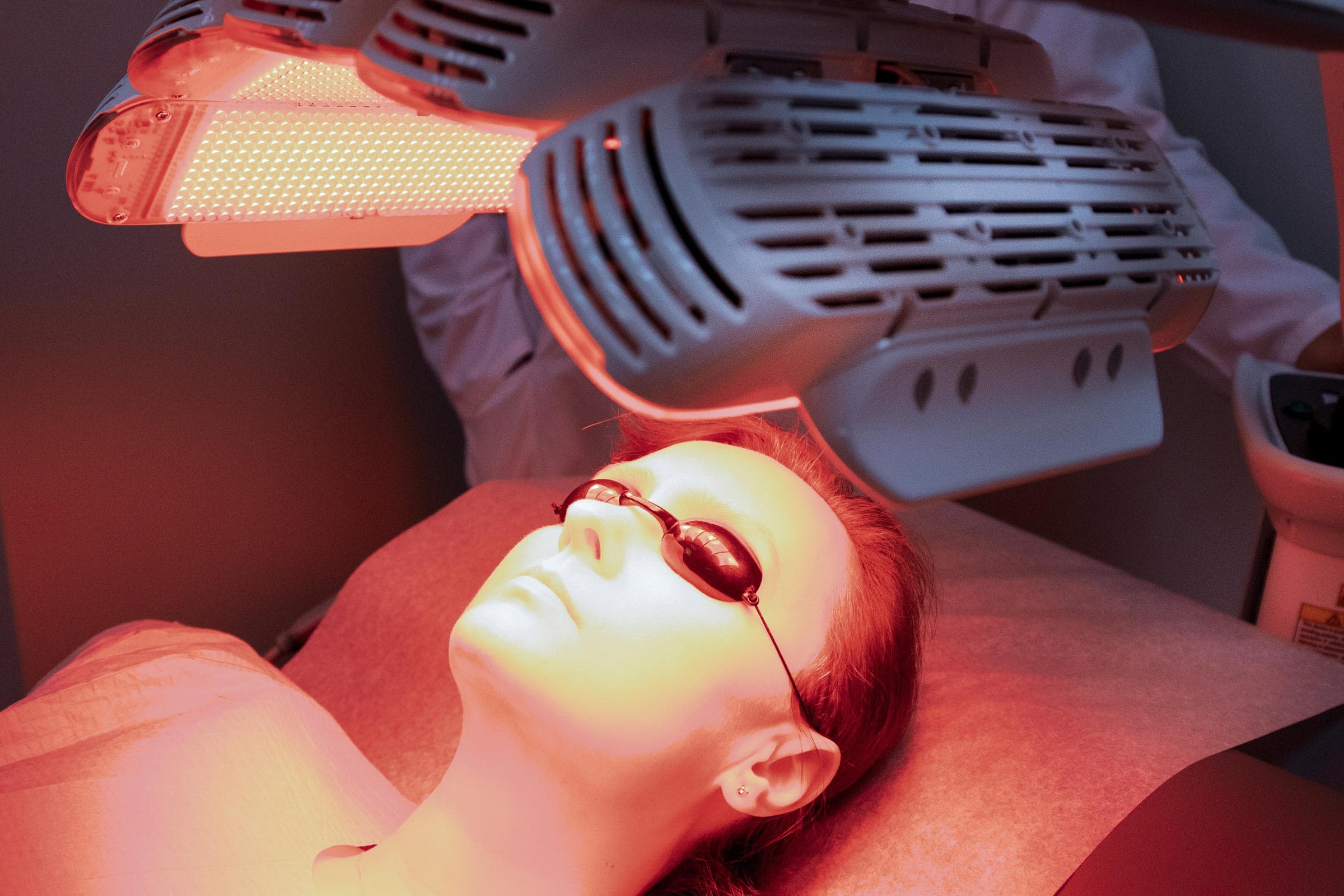
Topical calcineurin inhibitors, such as tacrolimus ointment and pimecrolimus cream, are frequently prescribed for facial psoriasis and are especially useful for sensitive areas, including the eyelids, as they are effective without the long-term risks associated with topical steroids. Newer topical medications are also currently available in Canada, such as topical roflumilast (Zoryve) and tapinarof (Nduvra). Controlled sun exposure or medically supervised phototherapy may also be beneficial. In cases of severe or treatment-resistant facial psoriasis, systemic therapies such as biologic agents, acitretin, cyclosporine, apremilast, or methotrexate may be considered.
Facial psoriasis is often a persistent condition, with severity fluctuating in response to factors such as seasonal changes, stress levels, and overall disease activity.
Your feedback helps us improve our news and clinical insights
From medical dermatology to surgical procedures, our clinic provides comprehensive care for all skin, hair, and nail conditions.