Clinical Hours: Mon-Fri, 8AM - 3PM(905) 493-5700
1885 Glenanna Road, Suite 220, Pickering, ON, L1V 6R6
Morphea is a localised fibrosing disorder of the skin characterised by indurated plaques, distinct from systemic sclerosis, and managed with phototherapy and immunosuppression.
Morphea, also known as localised scleroderma, is an autoimmune fibrosing disorder that primarily affects the skin and subcutaneous tissue. The condition is characterised by the excessive deposition of collagen, leading to areas of thickened, hardened skin. Unlike systemic sclerosis (scleroderma), morphea does not involve internal organs or produce Raynaud phenomenon, and it carries a fundamentally different prognosis.
Morphea can present in several clinical subtypes, including plaque morphea (the most common form), linear morphea, generalised morphea, and deep morphea. The condition can affect individuals of any age, although linear morphea is more frequently seen in children and adolescents, while plaque morphea is more common in adults. Morphea is approximately three times more common in women than in men.
The exact cause of morphea is not fully understood, but the condition is believed to result from an autoimmune process that triggers an inflammatory cascade, ultimately leading to excessive collagen production by fibroblasts. The pathogenesis involves an initial inflammatory phase with vascular damage and perivascular lymphocytic infiltration, followed by progressive fibrosis as activated fibroblasts deposit large amounts of collagen in the dermis and subcutaneous tissue.
Several potential triggers and risk factors have been identified:
The clinical presentation of morphea varies by subtype, but all forms share the common feature of skin induration (hardening). The course typically progresses through an early inflammatory phase, an active fibrotic phase, and a late atrophic phase.
Plaque morphea is the most common subtype and presents as one or more well-circumscribed, oval or round patches of indurated skin. Key features include:
Linear morphea presents as band-like areas of fibrosis that follow a linear distribution, often along a limb or on the face and scalp. When affecting the forehead and scalp, it is known as en coup de sabre due to its resemblance to a sabre wound. Linear morphea is the most common subtype in children and can extend into deeper tissues, including muscle and bone. In paediatric patients, linear morphea crossing a joint can cause limb length discrepancy and functional impairment if not treated early.
Generalised morphea is defined by the presence of four or more plaques involving two or more anatomical sites. Deep morphea involves the deeper dermis, subcutaneous fat, fascia, or muscle, and presents with bound-down, depressed skin that may be difficult to pinch. Both subtypes can cause significant morbidity and may require more aggressive systemic treatment.
The diagnosis of morphea is primarily clinical, based on the characteristic appearance and palpation of the skin lesions. A skin biopsy is performed when the diagnosis is uncertain or to distinguish morphea from other conditions in the differential. Histopathological findings include thickened, homogenised collagen bundles in the dermis, a perivascular lymphocytic infiltrate (particularly in early lesions), and loss of adnexal structures in established disease.
Laboratory investigations may reveal elevated inflammatory markers (ESR, CRP) and antinuclear antibodies (ANA), which are positive in approximately 20 to 40 percent of patients with morphea, particularly those with linear or generalised disease. Anti-single-stranded DNA antibodies and peripheral eosinophilia may also be present. Imaging with magnetic resonance imaging (MRI) can be valuable in assessing the depth and extent of involvement in linear and deep morphea.
Treatment of morphea is guided by the subtype, disease activity, and the risk of functional or cosmetic impairment. The goal is to halt disease progression during the active inflammatory phase, as established fibrosis is largely irreversible. A dermatology consultation is recommended for all patients to develop an appropriate treatment plan.
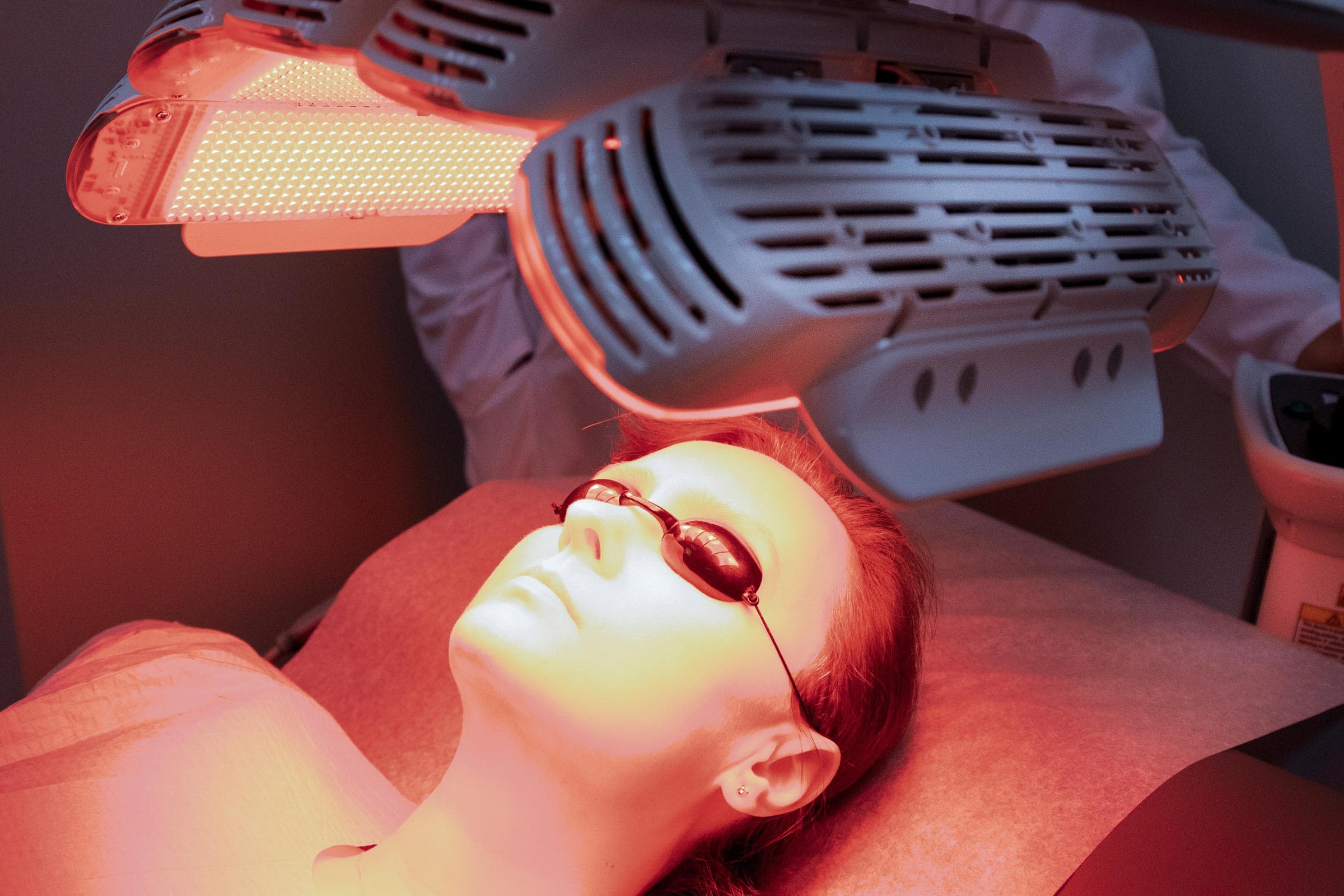
Phototherapy is one of the most effective treatments for plaque morphea and superficial forms of the disease. UVA1 phototherapy is considered the preferred modality, as it penetrates deeper into the dermis and has been shown to soften fibrotic plaques and reduce disease activity. Narrowband UVB phototherapy is also used and can be effective for superficial plaque morphea. A course of treatment typically involves multiple sessions per week over several months.
For limited, superficial plaque morphea with active inflammation, topical therapies may be appropriate. Options include potent topical corticosteroids to reduce inflammation, topical calcineurin inhibitors (tacrolimus) for steroid-sparing management, and topical calcipotriol (vitamin D analogue), which may help modulate fibroblast activity and collagen production.
Systemic treatment is indicated for linear morphea, generalised morphea, deep morphea, or any subtype with significant functional or cosmetic risk. Methotrexate, often combined with a short initial course of systemic corticosteroids, is the first-line systemic regimen and has the strongest evidence base. Treatment is typically continued for one to two years or longer to prevent relapse. Mycophenolate mofetil may be used as an alternative in patients who cannot tolerate methotrexate. All systemic therapies are managed through a structured prescription management programme with regular laboratory monitoring.
Regular clinical monitoring is essential to assess disease activity and treatment response. Clinical photography, skin scoring systems, and serial measurements of lesion size and skin thickness are used to track progression or improvement. In children with linear morphea, monitoring for limb length discrepancy and joint contracture is particularly important.
Medical evaluation is recommended when new areas of skin hardening, thickening, or discolouration develop, particularly if they are expanding or associated with a violaceous (purplish) border indicating active disease. Parents should seek assessment for children who develop band-like skin changes along a limb, as early treatment of linear morphea can prevent growth restriction and joint contracture. Patients with existing morphea should be reassessed if lesions are progressing despite treatment or if new lesions appear.
A referral from a family physician is the standard pathway to access dermatology services. Dr. Maksym Breslavets at the Centre for Medical and Surgical Dermatology provides specialist evaluation and management of morphea, including phototherapy, systemic therapy, and ongoing monitoring.
Your feedback helps us improve our condition information
Keep Exploring
Evidence-based articles on related skin, hair, and nail conditions.
A physician referral is required to access our medical services. Contact your primary care provider to begin the referral process.