Clinical Hours: Mon-Fri, 8AM - 3PM(905) 493-5700
1885 Glenanna Road, Suite 220, Pickering, ON, L1V 6R6
Granuloma annulare is a benign inflammatory skin condition presenting as ring-shaped plaques, typically self-limiting but sometimes requiring specialist evaluation.
Granuloma annulare is a common benign inflammatory dermatosis characterised by annular (ring-shaped) arrangements of smooth, firm papules and plaques. The condition is a non-infectious granulomatous disorder, meaning that it involves clusters of immune cells forming granulomas in the skin without an identifiable infectious cause.
Granuloma annulare can occur at any age but is most frequently diagnosed in children and young adults. The localised form, which is the most common variant, has an excellent prognosis and tends to resolve spontaneously within one to two years. The condition is generally asymptomatic and poses no risk of malignant transformation, although its clinical appearance may cause concern and prompt presentation for specialist evaluation.
The exact cause of granuloma annulare remains unclear. The condition is thought to represent a delayed-type hypersensitivity reaction leading to collagen and elastin degeneration (necrobiosis) in the dermis, surrounded by a palisading arrangement of histiocytes and lymphocytes. The trigger for this immune response has not been definitively identified.
Factors that have been associated with granuloma annulare include:
Granuloma annulare is not contagious, is not caused by infection, and is not related to skin cancer.
Granuloma annulare presents in several clinical variants, each with distinctive features:
This is the most common form, accounting for approximately 75% of cases. It presents as one or several annular plaques composed of flesh-coloured to erythematous, smooth, firm papules arranged in a ring pattern with a central clearing. The dorsal surfaces of the hands, fingers, feet, elbows, and ankles are the most frequently affected sites. Lesions are typically asymptomatic and range from 1 to 5 centimetres in diameter.
This variant accounts for approximately 15% of cases and presents with widespread, symmetrically distributed papules and annular plaques affecting the trunk and extremities. Individual lesions may be smaller than those in the localised form. Generalised granuloma annulare tends to be more persistent and less likely to resolve spontaneously. This form is more commonly seen in older adults and has been associated with metabolic conditions such as diabetes mellitus and dyslipidaemia.
Also known as deep granuloma annulare, this variant presents as firm, painless, deep-seated nodules in the subcutaneous tissue. It is most common in children, occurring on the lower legs, scalp, hands, and buttocks. The overlying skin typically appears normal. These nodules can be clinically difficult to distinguish from other subcutaneous masses, and biopsy may be required.
This rare variant presents with umbilicated papules that may discharge a clear or yellowish material. It is most often found on the dorsal hands and fingers and can occasionally result in superficial scarring.
The diagnosis of localised granuloma annulare is often made clinically based on the characteristic annular morphology and distribution. However, the clinical appearance can overlap with other conditions, and a skin biopsy is frequently performed to confirm the diagnosis, particularly for generalised, subcutaneous, or atypical presentations. Histopathology reveals palisading or interstitial granulomatous inflammation with necrobiosis (degeneration of collagen) and mucin deposition in the dermis.
The differential diagnosis includes fungal infections (tinea corporis, which typically shows surface scaling and can be confirmed with skin scraping), lichen planus (which presents with violaceous, polygonal, pruritic papules), necrobiosis lipoidica (which shows yellowish atrophic plaques with telangiectasia, often on the shins), and sarcoidosis (which may present with annular plaques but typically involves multiple organ systems). A specialist dermatology consultation ensures accurate differentiation from these conditions.
Localised granuloma annulare often resolves spontaneously within one to two years, and observation without active treatment is a reasonable approach for asymptomatic lesions. When treatment is desired for cosmetic reasons or persistent disease, several options are available.
High-potency topical corticosteroids, sometimes applied under occlusion, may be used for localised disease. Intralesional corticosteroid injections (triamcinolone acetonide) are a commonly used treatment for individual plaques and can accelerate resolution. Topical calcineurin inhibitors (tacrolimus, pimecrolimus) have been reported as beneficial in some cases.
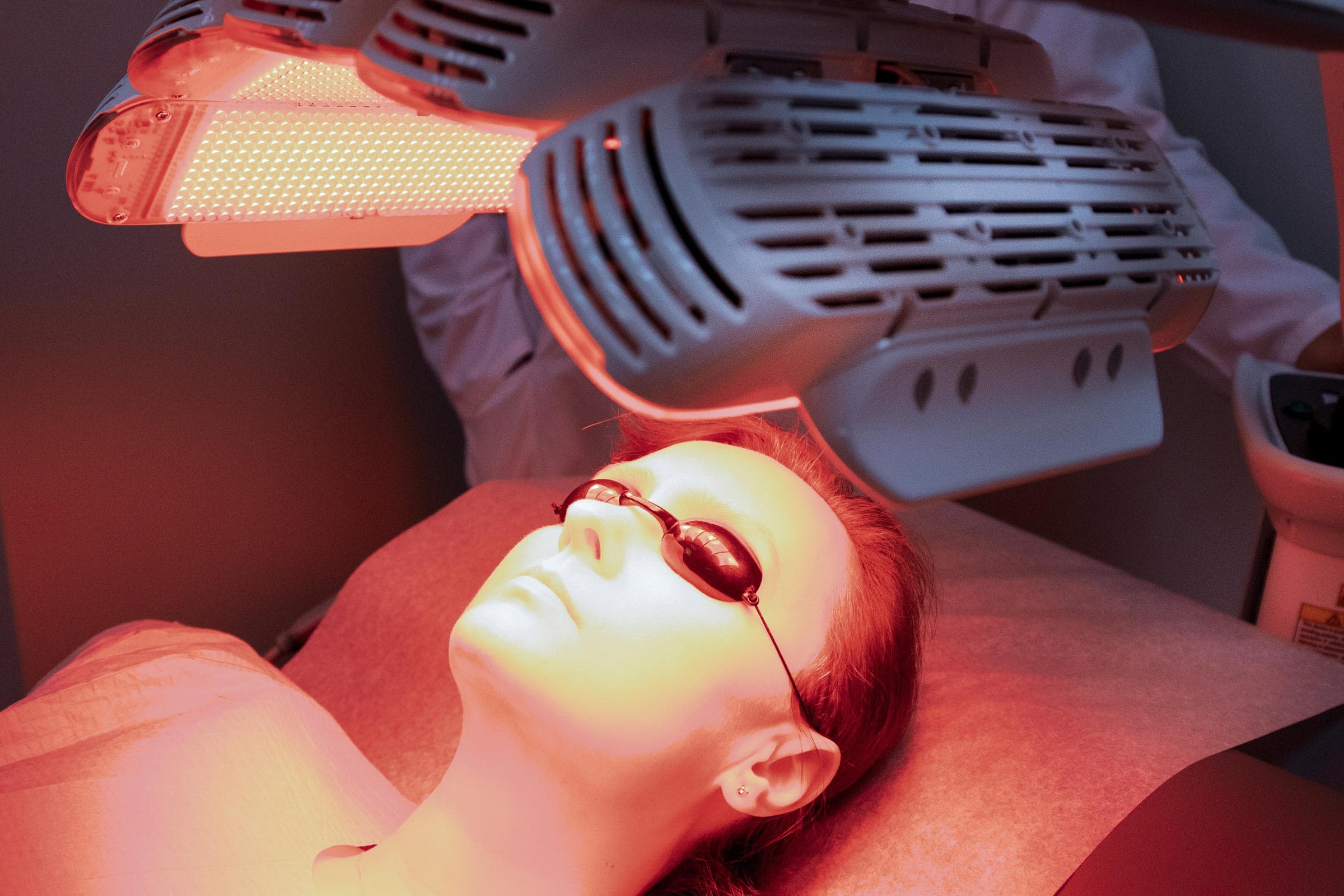
Narrowband UVB phototherapy or PUVA (psoralen plus ultraviolet A) may be considered for generalised granuloma annulare that does not respond to topical or intralesional treatment.
For widespread or recalcitrant generalised granuloma annulare, systemic therapies may be considered on a case-by-case basis. Options include hydroxychloroquine, dapsone, methotrexate, and isotretinoin. Janus kinase (JAK) inhibitors have shown promising results in emerging case reports and small studies. The evidence base for systemic therapies is limited and largely derived from case series and small trials, so treatment decisions are individualised based on disease severity and patient factors.
Dermatological assessment is recommended for any persistent, ring-shaped skin lesion to confirm the diagnosis and exclude other conditions. Evaluation is particularly important when lesions are widespread, rapidly enlarging, or associated with other symptoms such as joint pain or systemic illness. While granuloma annulare is benign, specialist evaluation provides reassurance and ensures that other granulomatous conditions, fungal infections, and neoplastic processes are appropriately excluded.
A referral from a family physician is the standard pathway to access specialist dermatology care. Dr. Maksym Breslavets at the Centre for Medical and Surgical Dermatology provides specialist evaluation and management of granuloma annulare, including diagnostic biopsy for confirmation and individualised treatment planning for persistent or generalised disease.
Your feedback helps us improve our condition information
Keep Exploring
Evidence-based articles on related skin, hair, and nail conditions.
A physician referral is required to access our medical services. Contact your primary care provider to begin the referral process.