Clinical Hours: Mon-Fri, 8AM - 3PM(905) 493-5700
1885 Glenanna Road, Suite 220, Pickering, ON, L1V 6R6
Rosacea is a chronic skin condition affecting the central face. Multiple treatment options exist, including topical therapies, oral antibiotics, and vascular laser treatments.

Rosacea is a chronic skin rash which usually occurs on the central part of the face. The most affected age groups are patients between 30 and 60 years old.
Rosacea can be triggered by multiple agents including genetic, environmental, vascular, and inflammatory ones. Chronic exposure to ultraviolet (UV) radiation can also influence skin damage.
Rosacea usually appears in the form of red spots (papules) and, in rare cases, as pustules. These spots have a dome-shaped form. Patients diagnosed with rosacea experience frequent facial blushing or flushing. Sun exposure, hot and spicy food, or drinks can trigger even more redness. Individuals with sensitive skin may experience burning and stinging sensations as a reaction to makeup, facial creams, or sunscreens. Due to affected eye areas, ocular rosacea can also be diagnosed. It is usually characterised by red, sore, and gritty eyelid margins with papules and styes.
Numerous treatment methods are available for rosacea, and these are unique to every patient. General measures include avoidance of oil-based facial creams; water-based makeup is recommended instead. Sun exposure should be avoided, and light oil-free facial sunscreens are advised. To decrease the flushing effect, reduction of hot or spicy food, alcohol, hot showers, baths, and warm rooms is highly recommended. Some individuals use ice blocks placed between the gum and cheek to reduce facial redness for a short period of time.
Topical steroids should not be used for treating rosacea, even though short-term improvements have been observed. In the long run, topical steroids cause rosacea outbreaks to be more severe due to increased production of nitric oxide.
Different variations of oral antibiotics are prescribed for course treatment. Tetracycline antibiotics, such as doxycycline and minocycline, are often used to treat rosacea. They help to reduce redness, pustules, papules, and eye symptoms. These antibiotics are usually prescribed for a course of 6 to 12 weeks. Duration and dosage amounts are calculated individually for every patient depending on the severity of rosacea. Further prescriptions are needed from time to time, as antibiotics do not cure the disorder.
The anti-inflammatory effects of antibiotics are currently under investigation; however, they have shown promising results. These antibiotics tend to inhibit the functions of matrix metalloproteinases (MMP), which in turn decrease inflammation and cathelicidins.
Long-term antibiotic use carries the disadvantage of developing bacterial resistance. Low doses that do not have antimicrobial effects are preferred when treating various skin conditions, including rosacea.
Topical treatments are also employed for rosacea. Metronidazole cream or gel is prescribed for mild inflammatory rosacea and in combination with oral antibiotics for more severe cases. Azelaic acid cream or lotion is an effective remedy for mild inflammatory rosacea and is applied twice a day.
Certain medications, such as carvedilol and clonidine, help to reduce vascular dilation (widening of blood vessels), which in turn reduces flushing. These medications are well-tolerated among patients. Some side effects may include dry eyes, low blood pressure, low heart rate, and blurred vision.
Oral non-steroidal anti-inflammatory agents, such as diclofenac, help to reduce discomfort and redness of the affected skin. Serious adverse effects are uncommon; however, renal toxicity, hypersensitivity reactions, and peptic ulceration may occasionally occur.
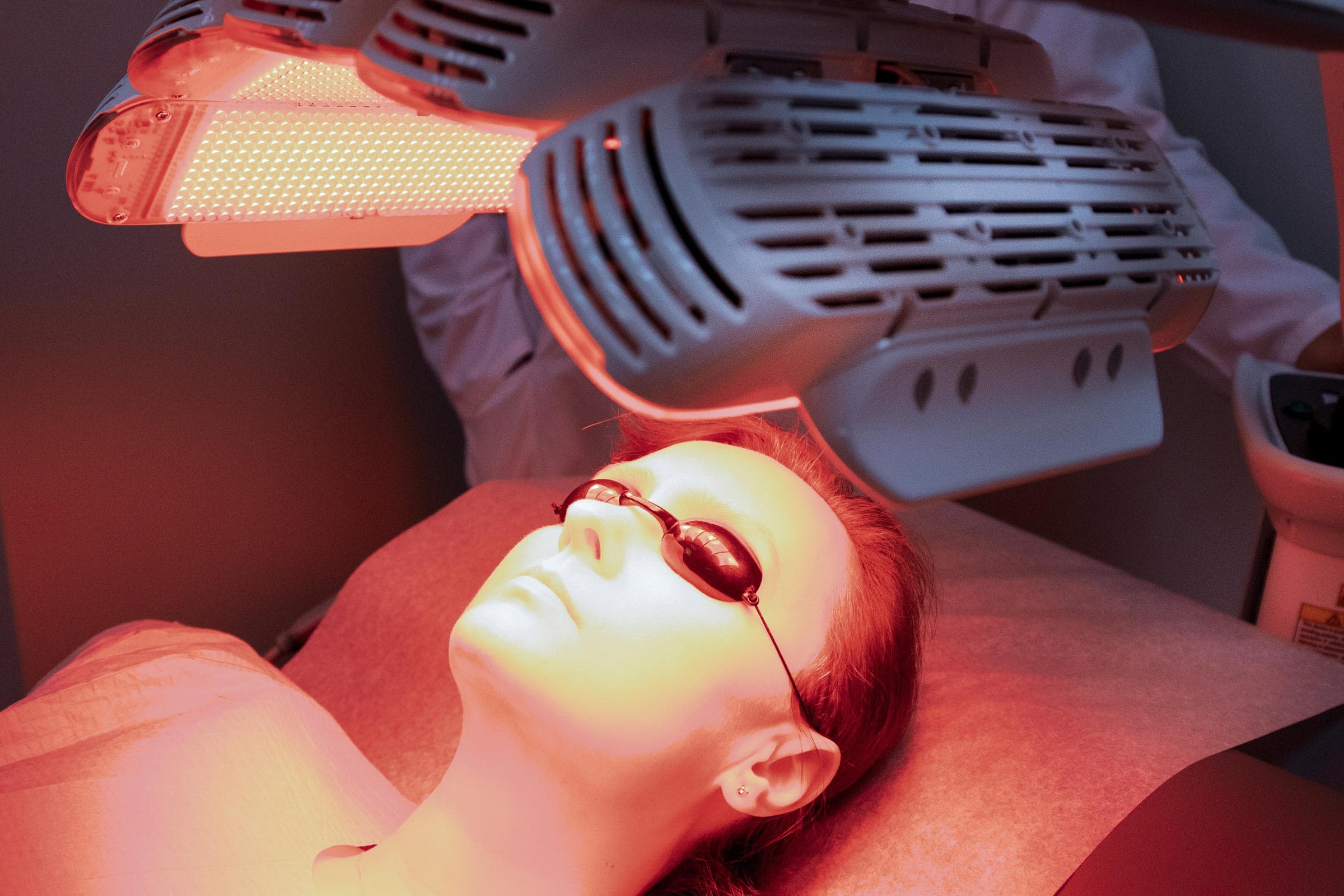
Vascular laser or intense pulsed light treatment can successfully reduce persistent telangiectasia (cutaneous blood vessels). Light pulses are targeted at the red pigment, known as haemoglobin, in the blood. They heat up and destroy the pigment without affecting other tissues or skin around the rash.
Your feedback helps us improve our news and clinical insights
From medical dermatology to surgical procedures, our clinic provides comprehensive care for all skin, hair, and nail conditions.