Clinical Hours: Mon-Fri, 8AM - 3PM(905) 493-5700
1885 Glenanna Road, Suite 220, Pickering, ON, L1V 6R6
Several non-medicamentous treatment options exist for moderate to severe acne and acne scarring, including radiofrequency microneedling, IPL, photodynamic therapy, and low-level light therapy.

Acne is a chronic, multifactorial inflammatory condition of the skin which results in inflammatory papules, pustules, and various spots on the face, neck, shoulders, upper arms, and chest. Mild acne can be treated with topical medications, both prescribed and non-prescribed. However, moderate and severe acne may require oral or systemic medications that include antibiotics, oral contraceptives, antiandrogen therapy (Spironolactone), and Isotretinoin (well known under the brand name "Accutane"). Each systemic medication has its own advantages, disadvantages, and side effects. Many individuals do not wish to take oral medications and seek alternatives. These alternatives do exist and may meaningfully change the course of acne while helping to alleviate its consequences, such as scarring, dyschromias, oily skin, and enlarged pores.
The most common effective non-medicamentous treatment options for acne and scar management include High Intensity Focused Radiofrequency Microneedling and Superficial Fractionated Radiofrequency (known as Sublative Radiofrequency Resurfacing).
The advanced platform Infini is utilised at the Centre for Medical and Surgical Dermatology.
This treatment method is based on controlled graded heating of sebaceous glands as well as tissues of acne scars at different levels of depth and temperature through the use of radiofrequency. Clinical trials demonstrated 90% improvement after 3 months when three treatments were administered at four-week intervals. Improvement of inflammatory acne and reduction of acne scars were observed as a result.
Often, two modalities are combined in order to make the treatment even more effective.
Park, J. Y., Lee, E. G., Yoon, M. S., & Lee, H. J. (2016). The efficacy and safety of combined microneedle fractional radiofrequency and sublative fractional radiofrequency for acne scars in Asian skin. Journal of Cosmetic Dermatology, 15(2), 102-107. Available from: https://onlinelibrary.wiley.com/doi/abs/10.1111/jocd.12195
Conventional microneedling, also known as collagen induction therapy, can also be used for the treatment of acne scars. Microneedling is a minimally invasive, non-surgical, and nonablative procedure used for facial rejuvenation that uses an eDermastamp to create a controlled skin injury. The needle is usually 0.5 mm in length, which helps to minimise bleeding and facilitate rapid recovery. The final result is intended to produce healthy, clear, and youthful-looking skin.
A second option is intense pulsed light (IPL). This treatment is based on the principle that IPL destroys Propionibacterium acnes (Cutibacterium acnes). Additionally, it increases the graded impact on blood vessels that supply the sebaceous glands, thereby reducing sebum production, redness, and inflammation on affected areas.
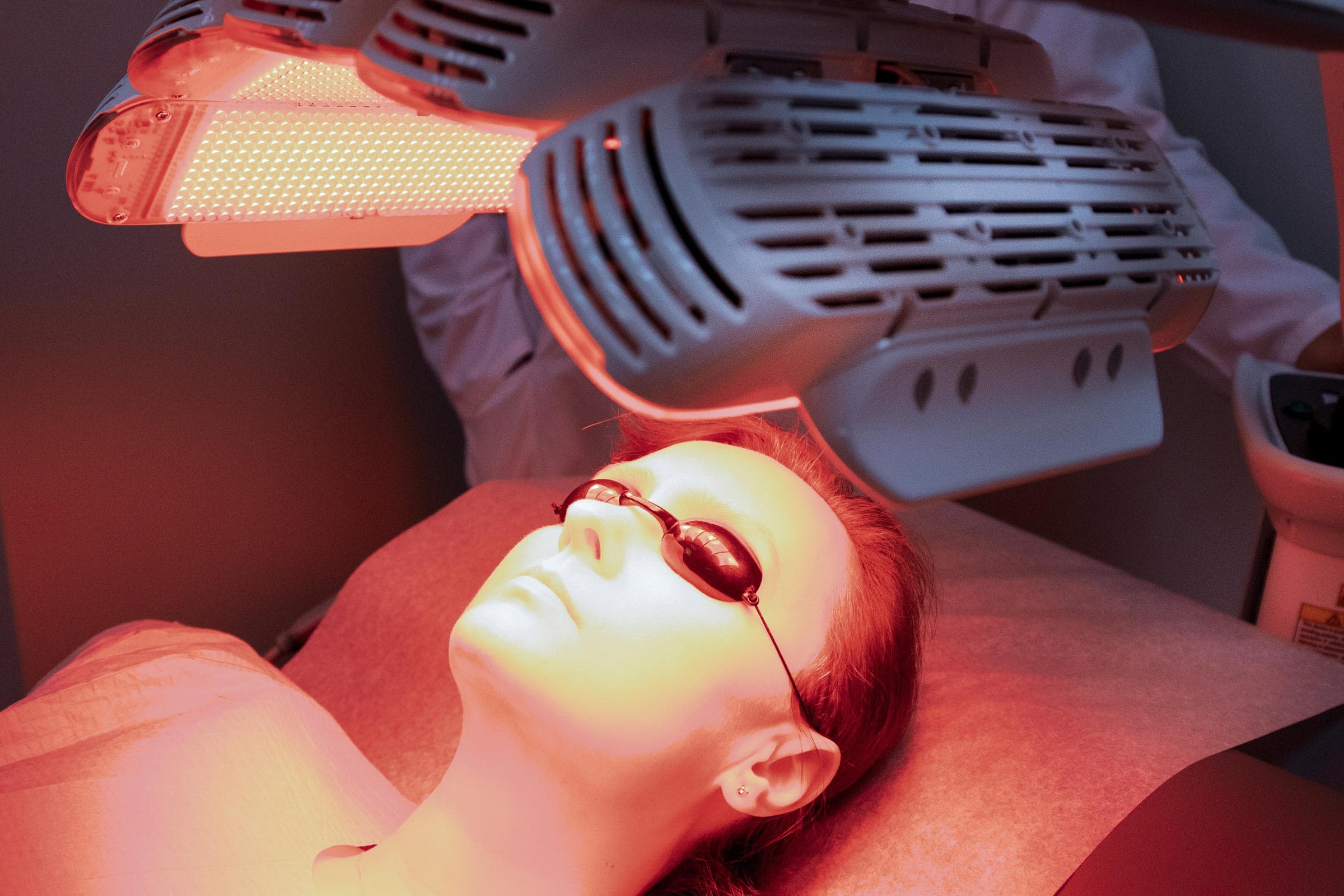
Another method is photodynamic therapy (PDT). A photosensitising agent is applied to the affected area and is allowed up to one hour to incubate on the skin. The agents used are typically 5-aminolevulinic acid (ALA) or a 20% solution of methyl aminolevulinate (MAL). Incubation time can be reduced through heating of the skin, a technique known as temperature-modulated photodynamic therapy. The purpose of the incubation period is to allow the photosensitising agent to be absorbed into the skin and sebaceous glands. Following incubation, red light, blue light, or a sequential combination of both is applied to the skin for approximately 15 to 20 minutes. The light activates the photosensitising agent, which subsequently destroys acne bacteria and shrinks oil glands.
Lastly, low level light (laser) therapy may be recommended as a treatment option. Phototherapy with visible light, including blue light, red light, or a combination of both, can be effective in treating acne. The mechanism typically involves the absorption of light, particularly blue light, by porphyrins produced by P. acnes, which act as endogenous photosensitisers. The interaction with blue light generates free reactive radicals and singlet (toxic) oxygen species, leading to bacterial destruction. Red light is used to penetrate deeper tissues, where it can influence sebum secretion from sebaceous glands and modify the behaviour of keratinocytes.
Your feedback helps us improve our news and clinical insights
From medical dermatology to surgical procedures, our clinic provides comprehensive care for all skin, hair, and nail conditions.