Clinical Hours: Mon-Fri, 8AM - 3PM(905) 493-5700
1885 Glenanna Road, Suite 220, Pickering, ON, L1V 6R6
Brown spots and freckles on sun-exposed skin are classified as ephelides or lentigines. Learn about their causes, differences, and available treatment options.

Brown spots and freckles that appear on sun-exposed skin are either ephelides (singular: ephelis) or lentigines. The ephelis tends to disappear in winter, while lentigo is present even in the absence of ultraviolet (UV) radiation. A single individual can have both ephelides and lentigines, and the risk factors for both conditions are generally the same.
Ephelides are very common among individuals with fair skin, especially children with red hair. The MCR1 gene is believed to be responsible for the formation of ephelides. Individuals with darker skin types can also inherit these characteristics due to the presence of the MCR1 gene.
Ephelis is brown due to a pigment called melanin. Melanocytes produce melanin, which is diffused into keratinocytes. Melanin production declines during the winter season and increases once the skin is exposed to UV radiation from sunlight.
Ephelides usually appear on the midface. As an individual ages, ephelides become less noticeable. They are more abundant during summer and fade during winter. Each ephelis is approximately 3 mm or less in diameter. Beyond sun protection, no additional treatment is required for ephelides.
Lentigines appear as brown, flat lesions with a well-defined edge. Solar lentigines, the most common type, appear with age due to prolonged sun damage. These lesions are usually found on the face and hands. They tend to be larger and more defined in comparison with ephelides. Other types of lentigo include lentigo simplex and ink spot lentigo.
Similarly to ephelides, lentigines are also common among individuals with fair skin. However, they also arise in individuals who have frequent sun exposure and tend to tan quickly, as well as those who naturally have darker skin. Lentigines most commonly affect individuals aged 40 years and older.
Solar lentigines are caused by UV radiation from sun exposure, tanning beds, or medical treatment such as phototherapy.
Solar lentigines generally persist for a prolonged period of time. They do not disappear during winter but may fade and become slightly lighter. Their diameter can vary from a few millimetres to several centimetres. The colour appears yellow or grey and is uniform across the entire lesion. The border is sharply defined; an irregular border may give the lesion a scalloped shape. The surface may be dry or scaly.
Seborrhoeic keratoses can arise from solar lentigo.
The majority of ephelides and lentigines can be diagnosed clinically. If a dermatologist identifies a brown mark as a potential cancerous lesion, the area can either be examined further with digital dermoscopic surveillance or excised for pathological analysis.
Not all brown marks on the skin can be prevented. The use of sun protection will greatly reduce the number of new solar lentigines. In addition to incorporating sunscreen into a daily skincare routine, wearing sun-protective clothing and limiting sun exposure are recommended. Sunscreens should have a high sun protection factor of SPF 50 or greater, as well as broad-spectrum coverage. Sunscreen should be applied frequently and liberally across the entire body.
Brown marks can gradually fade with consistent daily use of broad-spectrum sunscreen. Fading or anti-ageing creams may also help to reduce the appearance of these spots. Such products may contain hydroquinone or antioxidants such as vitamin C, retinoids, azelaic acid, alpha-hydroxy acids, or kojic acid.
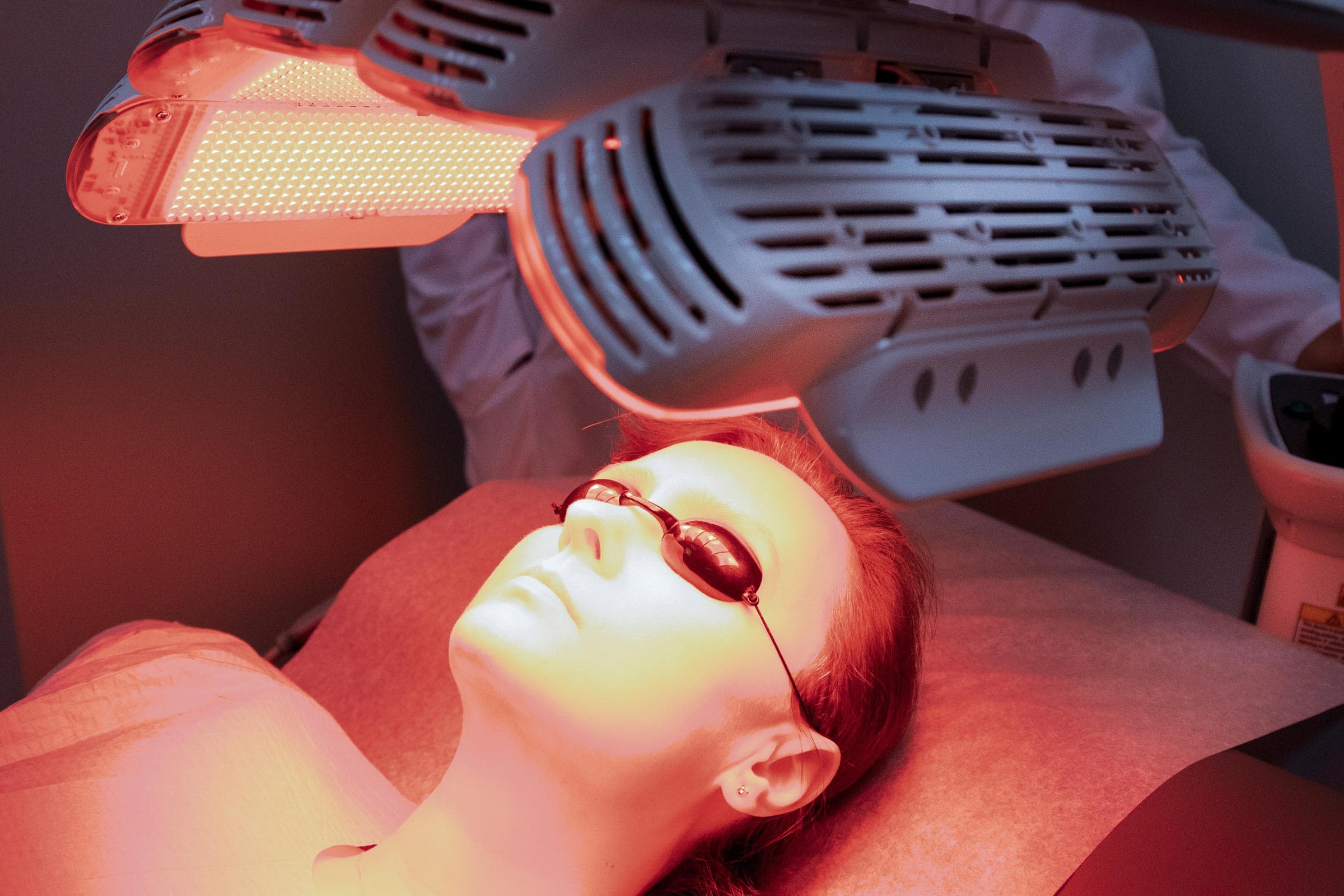
Brown marks can also be removed through cosmetic procedures such as chemical peels, cryotherapy, or laser treatments that target melanin within the skin. Multiple sessions are generally required to see improvement.
Your feedback helps us improve our news and clinical insights
From medical dermatology to surgical procedures, our clinic provides comprehensive care for all skin, hair, and nail conditions.