Clinical Hours: Mon-Fri, 8AM - 3PM(905) 493-5700
1885 Glenanna Road, Suite 220, Pickering, ON, L1V 6R6
Light-activated treatment targeting pre-cancerous changes and superficial skin cancers using photosensitizing agents, with particular effectiveness for field cancerization and actinic keratoses.

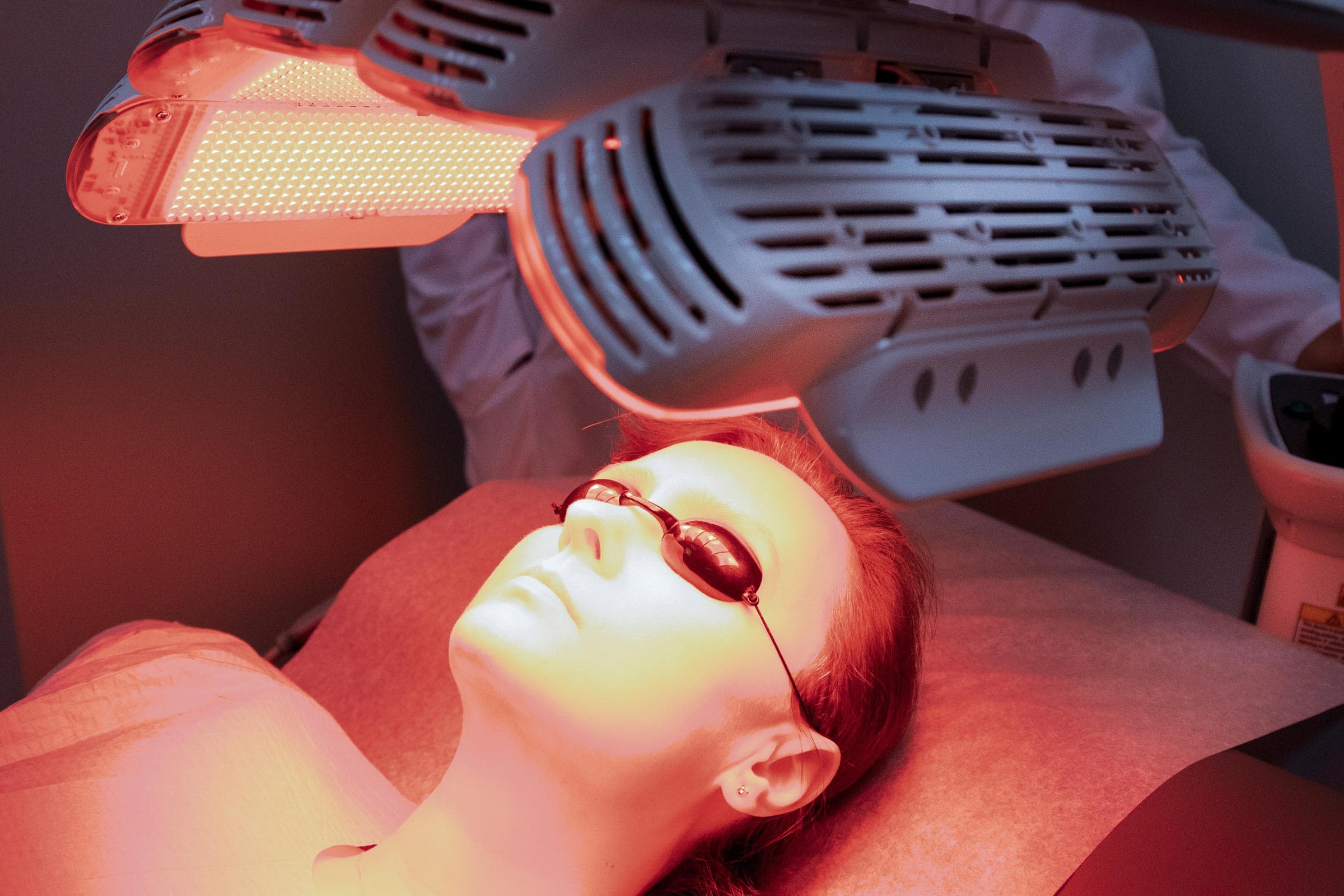
Photodynamic therapy (PDT) is a light-activated treatment that selectively destroys pre-cancerous and cancerous skin cells through a controlled photochemical reaction. By combining a topical photosensitizing agent with a specific wavelength of light in the presence of oxygen, PDT produces reactive oxygen species that cause targeted cell death. It is a well-established treatment in dermato-oncology for actinic keratoses, superficial basal cell carcinoma (BCC), and Bowen disease (squamous cell carcinoma in situ).
PDT relies on the interaction of three components: a photosensitizing agent, light of an appropriate wavelength, and molecular oxygen. Photosensitizing agents are applied topically to the skin, where they are preferentially taken up by abnormal, rapidly dividing cells such as pre-cancerous and cancerous cells. When exposed to activating light, the photosensitizer undergoes a photochemical reaction that generates reactive oxygen species, including singlet oxygen and free radicals. These reactive species damage cellular membranes and organelles, triggering selective destruction of the targeted abnormal cells while largely sparing surrounding healthy tissue.
The primary oncological indications for PDT include actinic keratoses, superficial BCC, and Bowen disease. In select cases, small, thin, low-risk nodular BCC located outside the head and neck region may also be considered for treatment. PDT is not appropriate for invasive or high-risk skin cancers, recurrent tumours, or melanoma.
One of the particular strengths of PDT in dermato-oncology is its ability to treat field cancerization, a condition in which large areas of chronically sun-damaged skin harbour multiple actinic keratoses and subclinical pre-cancerous changes. Unlike focal treatments such as cryosurgery or curettage and cautery, PDT can be applied to broad areas simultaneously, treating both visible and subclinical lesions across the entire affected field.
The photosensitizing agents most commonly used in oncological PDT include methyl aminolevulinic acid (MAL) cream and aminolevulinic acid (ALA) hydrochloride topical solution. MAL cream is indicated for the treatment of actinic keratoses and superficial BCC and may be activated with red light or natural daylight. ALA topical solution, approved in Canada for actinic keratoses, is activated with blue light. Cutaneous photosensitivity from these agents typically resolves within 24 hours of application.
The treatment procedure involves several stages. The skin surface may first be prepared through gentle scraping or superficial needling to remove scale and enhance penetration of the photosensitizing agent. The photosensitizer is then applied and left in place for an incubation period, typically one to three hours for conventional PDT, allowing preferential accumulation in abnormal cells.
The treatment area is then exposed to the activating light source for a prescribed duration. For daylight PDT, a sunscreen is applied to healthy skin before the photosensitizer, and the patient is exposed to natural daylight for approximately two hours. A second treatment session may be required depending on the clinical response, typically scheduled one to two weeks after the initial session.
PDT demonstrates high clearance rates for its primary oncological indications. For actinic keratoses, complete response rates of 70 to 90 percent are reported after one to two treatment sessions. For superficial BCC, clearance rates of approximately 80 to 90 percent are achieved with appropriate patient selection. Bowen disease responds similarly well to PDT. Cosmetic outcomes are generally excellent, with minimal scarring compared to surgical or destructive alternatives.
Side effects during and after treatment are common and expected. These may include burning or stinging sensations, redness, swelling, crusting, and blistering at the treatment site. These reactions reflect the photodynamic destruction of abnormal cells and typically resolve over four to eight weeks. Local anaesthetics may be applied to manage discomfort during the light exposure phase. Post-treatment sun avoidance is necessary for approximately 24 hours to prevent enhanced photosensitivity reactions.
At the Centre for Medical and Surgical Dermatology, Dr. Maksym Breslavets provides individualized PDT treatment plans for pre-cancerous and cancerous skin conditions, with careful patient selection to optimize oncological outcomes and cosmetic results.
Your feedback helps us improve our service information
The Centre for Medical and Surgical Dermatology provides comprehensive care across all areas of dermatology. To schedule a consultation with Dr. Breslavets, please obtain a referral from your healthcare provider.