Clinical Hours: Mon-Fri, 8AM - 3PM(905) 493-5700
1885 Glenanna Road, Suite 220, Pickering, ON, L1V 6R6
The most common skin cancer, treated with surgical excision and Mohs surgery.

Basal cell carcinoma (BCC), a common keratinocyte cancer also referred to as nonmelanoma cancer, is the most prevalent form of skin cancer. Known by names such as rodent ulcer and basalioma, individuals with BCC frequently experience multiple primary tumours over time.
Characteristically, BCC is a locally invasive skin tumour exhibiting a slowly growing plaque or nodule, which may be skin coloured, pink, or pigmented, and variable in size. It may spontaneously bleed or ulcerate. While BCC rarely poses a threat to life, a small proportion of cases can grow rapidly, invade deeply, or metastasise to local lymph nodes.
BCC arises from multifactorial causes, predominantly DNA mutations in the patched (PTCH) tumour suppressor gene, part of the hedgehog signalling pathway, often triggered by ultraviolet radiation exposure. Both spontaneous and inherited gene defects can predispose individuals to BCC.
Several factors increase the risk of developing BCC. It is particularly common in elderly males, though it also affects females and younger adults. The following are recognised risk factors:
BCC manifests in several clinical types and over 20 histological growth patterns. The major clinical subtypes are described below.
Nodular BCC is the most common type found on the face. It appears as a shiny or pearly nodule with a smooth surface, potentially with a central depression or ulceration, giving it a rolled edge appearance, and blood vessels visible across its surface. The cystic variant is soft with jelly-like contents. Micronodular, microcystic, and infiltrative types are aggressive-growth subtypes that carry a higher risk of recurrence and local invasion.
Superficial BCC is often found in younger adults and is commonly located on the upper trunk and shoulders. It presents as a slightly scaly, irregular plaque with a thin, translucent rolled border and multiple microerosions.
Morphoeic BCC is typically located in mid-facial areas and resembles a waxy, scar-like plaque with indistinct borders. It can infiltrate cutaneous nerves, a process known as perineural spread. This subtype is also referred to as morpheic, morphoeiform, or sclerosing BCC.
Basosquamous carcinoma is a mixture of basal cell carcinoma and squamous cell carcinoma. It exhibits an infiltrative growth pattern and can be more aggressive than other BCC forms.
Advanced BCCs are large, often neglected tumours that can be several centimetres in diameter, deeply infiltrating, and challenging or impossible to treat surgically. Metastatic BCC is extremely rare and often arises from large, neglected, or recurrent primary tumours on the head and neck with aggressive subtypes. These cases may have undergone multiple prior treatments and can be fatal.
BCC diagnosis is typically clinical, based on the presence of a characteristic, slowly enlarging skin lesion. The diagnosis and histological subtype are usually confirmed pathologically by a diagnostic biopsy or following excision. Some superficial BCCs on the trunk and limbs are clinically diagnosed and treated non-surgically without histological confirmation.
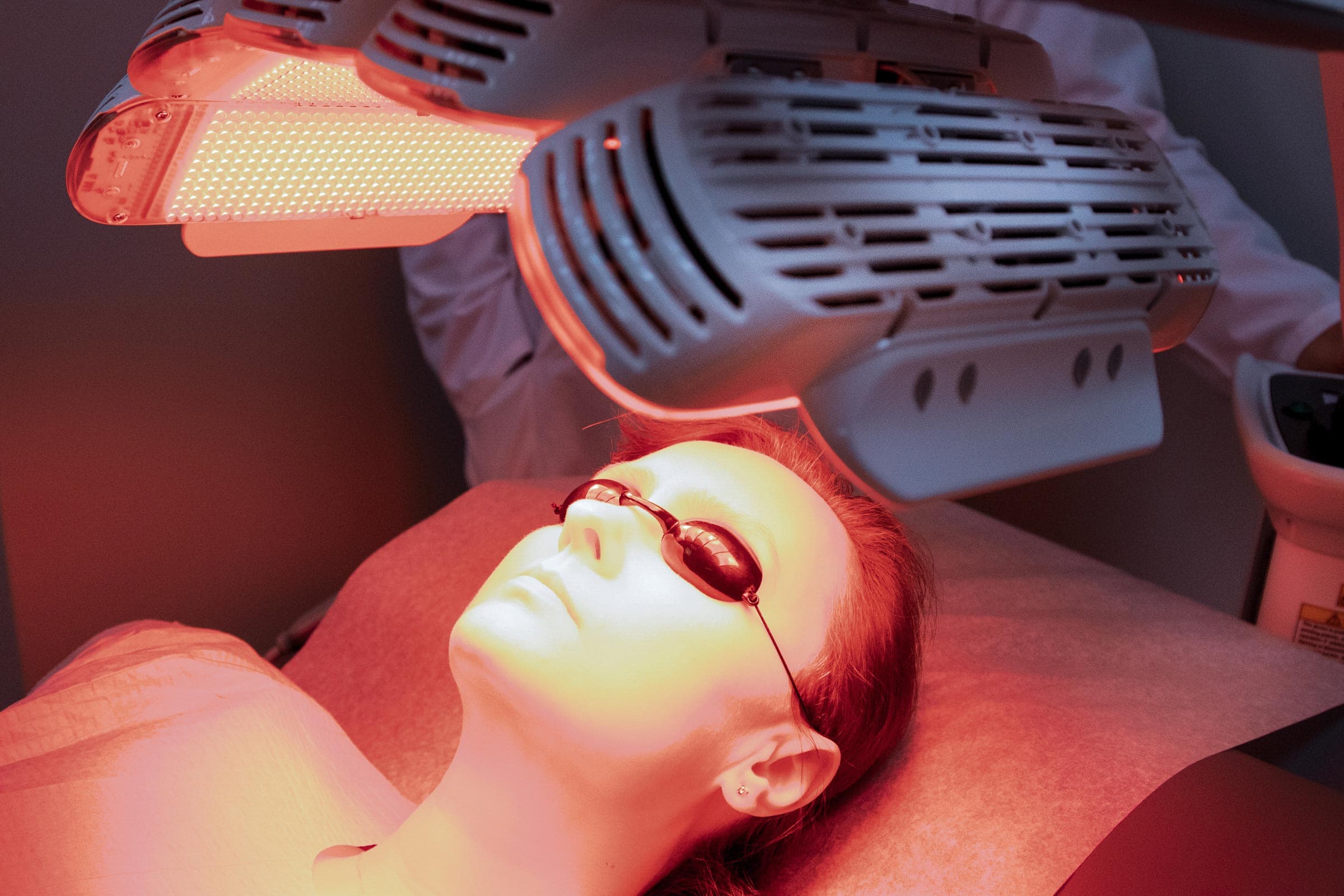
Treatment selection depends on the subtype, size, location, and depth of the tumour, as well as patient factors such as age and immune status. Common treatment approaches include surgical excision, Mohs micrographic surgery, curettage and electrodesiccation, cryotherapy, topical therapies, photodynamic therapy, and radiation therapy. Advanced or metastatic cases may require hedgehog pathway inhibitors or other systemic agents. At the Centre for Medical and Surgical Dermatology, basal cell carcinoma is diagnosed and managed through the Skin Cancer & Cutaneous Oncology Clinic, and selected superficial tumours are treated through the Photodynamic Therapy & Field Therapy Clinic.
BCC recurrence after initial treatment is not uncommon, particularly in cases of incomplete excision, narrow margins at primary excision, or when morphoeic, micronodular, and infiltrative subtypes are involved, especially when located on the head and neck. Close follow-up is recommended following treatment.
Medical evaluation is recommended for any slowly enlarging, non-healing, bleeding, or ulcerating skin lesion, particularly in individuals with known risk factors for BCC. Early assessment and treatment reduce the likelihood of local tissue destruction and the rare risk of metastatic spread. Individuals with a history of BCC are advised to undergo regular skin examinations, as multiple primary tumours can develop over time.
Your feedback helps us improve our condition information
Keep Exploring
Evidence-based articles on related skin, hair, and nail conditions.
A physician referral is required to access our medical services. Contact your primary care provider to begin the referral process.